






$10 PayID Casino Bonuses in Australia Explained
 Available in AU
PayID is a way to fund an account, while no-deposit cash and free spins are promotions governed by separate terms.
Table of Contents
- A $10 PayID Deposit Is Not the Same as a No-Deposit Bonus
- How No-Deposit Cash and Free Spins Actually Work
- Signing Up for Free Pokies Without Missing the Fine Print
- What a $10 Welcome Bonus Really Gives You
- Pokies, Not the Tables: Where Bonus Wagers Usually Count
- Free Spins, First Deposits, and the Games Your Bonus Allows
- The Terms That Can Shrink a Bonus Before You Cash Out
- Bonus Codes and Match Offers: Check Before You Claim
- A $10 Bonus Can Mean $400 or $500 in Required Bets
- Real-Money Play in Australia: Know the Legal Boundary
A $10 PayID Deposit Is Not the Same as a No-Deposit Bonus
A $10 PayID deposit is money you send from your bank to an account at a casino. It is not a no-deposit bonus, even if the casino attaches a welcome offer to the payment. I’ve made that mistake myself: I saw “$10 bonus” beside a payment option and read it as free money. The catch was in the distinction between the deposit and the promotion.
PayID is a bank transfer method used in Australia. Rather than entering BSB and account numbers, you can send funds using a linked email address or mobile number. PayID transfers are described as settling in seconds, and Australian banks describe them as free. That can make PayID useful when an offer requires a deposit and you want to use your bank account to fund it.
But the payment itself is still yours. If you transfer $10, you have deposited $10. A casino may advertise a match offer or another welcome promotion alongside that payment, but the promotion is separate from the money you sent. The wording matters: “$10 deposit” describes what you pay in; “$10 bonus” describes an offer, subject to its terms. They are not interchangeable labels.
If you’re looking for a $10 PayID casino no-deposit bonus in Australia, check the terms carefully: the details available here don’t confirm whether any operator offers that specific bonus. These notes highlight only the listed licensing, deposit and payout details.
License: Curacao Gaming Control Board OGL/2023/176/0095 (Hollycorn N.V.) You can note that LuckyVibe is licensed by the Curacao Gaming Control Board under OGL/2023/176/0095, held by Hollycorn N.V.
License: Curacao Gaming Control Board OGL/2023/176/0095 (Hollycorn N.V.) Neospin is licensed by the Curacao Gaming Control Board under OGL/2023/176/0095, held by Hollycorn N.V.
License: Curacao eGaming OGL/2023/174/0082 (Dama N.V.) · Min. deposit: A$15 LevelUp Casino lists a minimum deposit of A$15 and a Curacao eGaming licence under OGL/2023/174/0082, held by Dama N.V.
License: international iGaming licence – jurisdiction not named in the source · Payout speed: PayID 1-24 hours · Min. deposit: A$30 (PayID from A$10) House of Pokies lists PayID payouts of 1–24 hours and a minimum deposit of A$30, with PayID deposits from A$10. Its source describes its licence as international but does not name the jurisdiction.
License: Curacao Gaming Control Board OGL/2023/174/0082 (Dama N.V.) SpinsUp is licensed by the Curacao Gaming Control Board under OGL/2023/174/0082, held by Dama N.V.
License: Curacao eGaming (Roby Games Ltd) Roby Casino lists a Curacao eGaming licence held by Roby Games Ltd.
License: Curacao · Min. deposit: A$20 (POLi) Lucky Dreams lists a Curacao licence and a minimum POLi deposit of A$20.
Payout speed: crypto under 1 hour, PayID 1-3 business days · Min. deposit: A$20 (A$30 to qualify for the bonus) Ricky Casino lists crypto payouts under 1 hour and PayID payouts of 1–3 business days. Its minimum deposit is A$20, rising to A$30 to qualify for the bonus.
License: Curacao Gaming Authority (Jumpman Gaming Ltd) DragonSlots Casino lists a Curacao Gaming Authority licence held by Jumpman Gaming Ltd.
Payout speed: crypto 30-120 minutes, fiat 24-72 hours · Min. deposit: A$30 MrPacho lists crypto payouts of 30–120 minutes and fiat payouts of 24–72 hours, with a minimum deposit of A$30.
What the $10 is doing
Think of the deposit as the key that meets an offer’s entry condition, not as the offer itself. A casino deposit bonus of $10 might mean the operator adds bonus funds when you make a qualifying deposit. A match offer may instead calculate an extra amount from your deposit. The details depend on the offer, so the headline alone does not tell you what will be credited or what you can later withdraw.
A no-deposit offer is different at the starting point: it may provide free cash or free spins for opening an account without asking you to deposit first. That does not turn a PayID transfer into a no-deposit bonus. If you had to send money, the offer was not deposit-free for you, regardless of how prominently the casino displays the word “free.”
I now separate those two amounts before deciding whether an offer is worth looking at. What leaves my bank is the deposit. Anything added by the casino is promotional credit, if the offer’s conditions are met. A small deposit can be part of a welcome offer, but it remains my money going in.
PayID handles deposits, not the whole cash journey
There’s another detail that’s easy to miss in a payment banner. PayID may be available for deposits, but that does not mean a later withdrawal will return through PayID. At most offshore casinos serving Australian customers, withdrawals use bank transfer instead. So the deposit route and the withdrawal route can differ.
That distinction matters when you are comparing a $10 PayID deposit with a casino offering a $10 bonus. The first tells you how you might fund the account. The second tells you something about a promotion, but not necessarily what payment method it needs, whether it is tied to a deposit, or how the funds can be withdrawn. Check the payment and offer terms as separate things.
I used to treat the payment logo as a shortcut: if PayID was there, I assumed the rest would be just as simple. It only answers how a deposit may be sent. It does not explain what a bonus means, and it does not promise that withdrawals use the same channel. Different jobs. Easy to mix up.
So if you’re looking for a $10 PayID deposit casino, first work out whether the offer is asking you to fund the account or promising a no-deposit reward. Those are two different arrangements. PayID can move your deposit from your bank; it does not make that deposit free, and it does not change the terms attached to a promotion.
How No-Deposit Cash and Free Spins Actually Work
A no-deposit offer can mean cash or free spins credited after you create an account, without first paying money into it. “Free” sounds simple; the catch is that a bonus balance is not automatically cash you can withdraw. The offer may come with a wagering requirement: you must place bets that add up to a specified amount before winnings become eligible for withdrawal.
Attention: A bonus balance is not automatically cash you can withdraw; it often comes with wagering requirements that must be met first.
That distinction matters. Bonus cash gives you a balance to wager, while free spins give you a set of plays on a pokie. A spin may produce a win, but that does not necessarily make the resulting amount withdrawable. The offer’s rules decide how winnings are treated and what conditions must be met first. So I’d read “no deposit” as describing how the offer is received, not as a promise of money you can take straight out.
Wagering requirements are commonly expressed as a multiplier. The relevant base might be the bonus amount, or the bonus plus a deposit if an offer involves one. That difference changes the total betting target, so the multiplier alone tells you only part of the story. For a no-deposit offer, check which amount the operator applies it to. Don’t assume every casino calculates it the same way.
The ranges reported for Australian-facing no-deposit offers are not perfectly consistent. One specialist review gives a range of 40× to 60×, while another account of the market puts it at 40× to 70×. Treat those as reported ranges, not a rule that applies to every offer. The specific terms attached to the bonus are what matter.
I used to see a bonus balance and mentally spend it before I’d checked what stood between it and a withdrawal. That was backwards. The wagering requirement is not a small administrative detail; it can mean placing a substantial volume of bets, and the money used for those bets is not necessarily yours to keep. A win during wagering does not erase the condition.
Free spins can make the offer feel less abstract, because you can see the number of plays rather than a cash balance. But their outcome still sits within the offer’s rules. A spin win may be credited as bonus winnings and remain subject to wagering, rather than appearing as withdrawable cash. The format changes; the basic hurdle does not.

There is another distinction worth keeping in mind: wagering progress is not the same as profit. Bets can count toward a requirement while your balance rises or falls. Completing the required betting does not guarantee that you will still have a balance to withdraw, nor does it remove other conditions that may apply to the offer. It simply means that one stated hurdle has been met.
So when you see a $10 no-deposit bonus, separate three things in your head: what is credited, what betting is required, and what the rules say about any resulting winnings. The headline amount tells you the first part only. A no-deposit chip can be a way to try an offer without making a payment, but it is not the same as receiving unrestricted cash. Check the wording before you count it as money in your pocket.
Signing Up for Free Pokies Without Missing the Fine Print
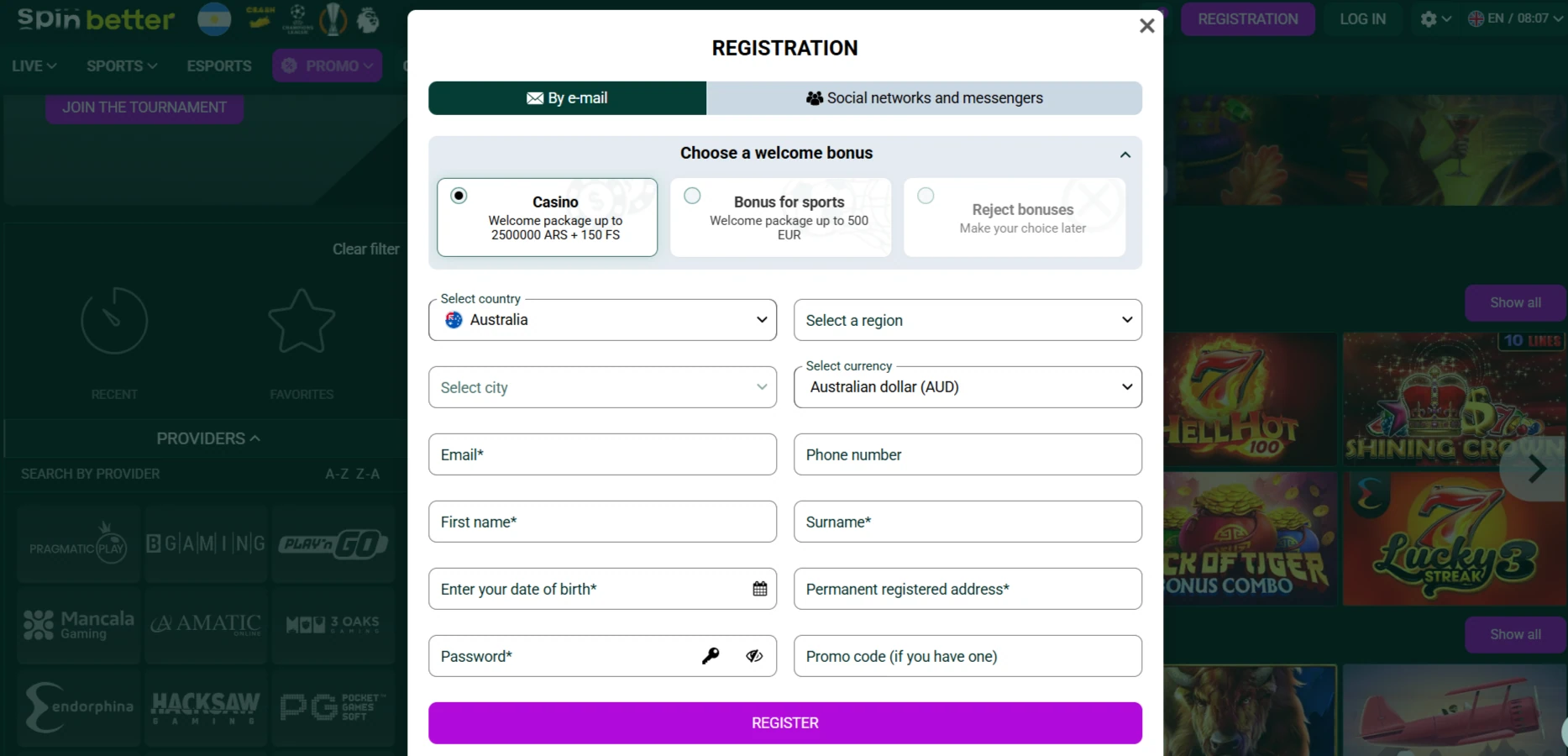
A “free sign-up bonus” sounds like a reward for opening an account. The practical catch is that the offer may not appear until the account has been created and a required verification step is complete. I’ve learned not to treat the word “free” as meaning “nothing to check”. It describes the advertised entry point, not necessarily the conditions attached to claiming or withdrawing anything.
Claiming Your Bonus
- Read the offer’s own terms and verify the page is genuine
- Check if the bonus is automatic or requires a code
- Confirm where the code must be entered during registration or in the cashier
- Complete any required email verification within the specified timeframe
Before entering personal details, read the offer’s own terms and check that the page is genuine. Look for the exact claim conditions: whether the bonus is automatic, whether you must select it during registration, or whether a code is required. A specialist review describes no-deposit offers that are credited automatically as well as offers requiring a code during sign-up or in the cashier. That is not a rule for every offer, so the operator’s current terms are what matter. If the claim method is unclear, don’t assume the credit will arrive later.
I once assumed a promotion would attach itself to my account because I had landed on the right page. It didn’t. The useful lesson was boring: read the claim instructions before starting, and keep a copy of the terms shown at the time. If a code is required, check where it belongs and whether the offer says it must be entered before registration is completed. A code field in the cashier is not proof that every promotion can be claimed there.
Email verification can also be part of claiming a no-deposit offer. One specialist review reports a requirement to use a verification link within 24 hours. Treat that as a reported condition, not a standard deadline across casinos; check the offer and the account messages you actually receive. If verification is required, make sure the email address is entered correctly and look for the message before assuming the bonus has failed to credit. Don’t follow a link from an unexpected message unless you can confirm it relates to the account you created.
The bigger issue is the setting in which these sign-up offers are promoted. In Australia, the Interactive Gambling Act 2001 prohibits operators from providing real-money online casino games to people physically located here. A page advertising free pokies or a $10 no-deposit sign-up bonus does not change that legal position. Nor does a registration form make an offshore service an Australian-regulated casino. I won’t dress a sign-up path up as a recommendation.
If you encounter such a promotion, read the claim wording with a sceptical eye. Is the offer genuinely described as no-deposit, or does it say a deposit is needed to activate it? Does it say verification is required before credit, or only before withdrawal? Are there separate steps for confirming an email and claiming the promotion? Those distinctions can decide whether an offer is attached to an account at all, even before its later conditions come into play.
Keep the paperwork. Save the offer terms, any confirmation screen, and relevant messages. If the bonus does not appear, those records help you identify whether the advertised claim steps were followed; they do not guarantee that an operator will resolve a dispute in your favour. Offshore sites do not give Australian players the protections of local consumer regulation. That part is easy to overlook when the sign-up page is all bright buttons and “claim now” language. The fine print is the real offer.
What a $10 Welcome Bonus Really Gives You
A $10 welcome bonus can look simple until you notice that the cash and the free spins may not share the same clock. I used to treat “valid for a week” as if it covered every part of an offer. That is an easy way to leave something unused: the cash can have one expiry window, while spins attached to the same promotion may disappear sooner.
Cash bonuses and free spins within the same promotion may have different expiry windows, such as seven days for cash and 72 hours for spins.
One specialist review reports a seven-day validity period for no-deposit cash bonuses and an expiry of 72 hours for free spins. Those timings are not a rule for every casino welcome bonus, so I would not treat them as a promise. They are a reminder to look for separate deadlines in the offer’s terms, rather than scanning only the headline.
For a $10 cash offer, find the point at which its validity period begins. The terms should make clear whether the clock starts when the bonus is credited or when another claim step is completed. If the offer includes spins as well, check their expiry separately. Don’t assume that finishing one part of the claim keeps the other part active.
I now check the expiry before I spend time on an offer. If I cannot tell when the deadline starts, or whether cash and spins expire together, I treat that as a reason to pause and read the detailed terms. A countdown can matter even when the bonus amount is modest. “Welcome” is the label; the actual time you have is in the conditions.
It also helps to distinguish an expiry from a general statement that the promotion is available. A welcome offer may still be displayed while the bonus already credited to an account has its own validity window. What matters to you is the deadline attached to your specific reward, not just whether the promotion appears on a page.
So, before accepting a casino $10 welcome bonus, look for the cash deadline and the free-spin deadline as separate details. Note when each begins and what the terms say happens when it runs out. That small check can stop you from assuming you have more time than the offer allows. No guesswork.
Pokies, Not the Tables: Where Bonus Wagers Usually Count
A wagering requirement can look like one simple target, but the game you choose affects how quickly your bets count towards it. A bet on a pokie may count in full. A bet on a table game may count only in part—or not at all under the offer’s rules. That difference is easy to miss when you’re focused on the headline bonus.
I used to treat every game in the lobby as interchangeable. It isn’t. If an offer counts pokie wagers at 100%, a qualifying bet contributes its full value to the wagering total. By contrast, blackjack, baccarat and roulette may contribute only 0–10% in many cases. Some live dealer rounds may count at as little as 3%. The figures vary by offer, so a game’s presence in the lobby does not tell you how much it contributes.
Why the contribution rate matters
Say a game contributes 100%: the full amount of a qualifying bet is credited towards wagering progress. If the rate is lower, only a fraction counts. At a 10% contribution, for instance, a bet adds only a tenth of its value to the total. At 3%, it adds less still. The game can feel busy while the progress bar barely moves.
That’s why pokies tend to be more useful for wagering than table games. Their contribution is generally full, while many table-game rates are sharply reduced. A player switching from pokies to roulette or blackjack may therefore make plenty of bets without making comparable progress. I’ve made that mistake: I watched the balance move and assumed the requirement was moving at the same pace. It wasn’t.
- Prioritise pokies for wagering as they generally offer 100% contribution
- Check the eligible-games list for specific exclusions
- Confirm the contribution rate for each game type
- Assume all lobby games contribute equally to wagering
- Use table games or live dealer titles expecting full credit
- Mistake a game’s presence in the lobby for its eligibility
Full contribution still does not mean every pokie bet will count. The offer may exclude a particular game, or put limits on which games are eligible. The contribution rate applies only where the game and the bet meet the offer’s rules. Read the game list and the wagering terms together, rather than treating “pokies count at 100%” as a blanket promise.
A game can be excluded entirely
Contribution and eligibility are separate questions. A game might be listed in the casino but excluded from a no-deposit offer. Progressive jackpots, table games and live dealer titles are common exclusions. If a game is excluded, its contribution may be zero regardless of the rate you expected.
That distinction matters with table games in particular. One offer might give a low contribution to a game, while another may exclude table games altogether. Live dealer games can also be treated differently from standard digital versions of similar games. Don’t assume that online blackjack and live dealer blackjack follow the same rule just because the game name is similar.
Progressive jackpot pokies deserve the same caution. They are pokies, but that does not automatically make them eligible or give them the standard contribution rate. If the rules exclude progressive jackpots, playing one can fail to advance wagering even though other pokies count. The category label alone is not enough.
Check the exact game, not just the category
Before choosing a game, look for the offer’s eligible-games list and any separate contribution table. Confirm the exact title and format. If the terms say that pokies contribute fully but list exceptions, those exceptions matter more than the broad category. If table games are restricted, don’t infer that every title has the same reduced rate—or that any of them will count.
I also wouldn’t use a vague lobby label as proof. A game grouped under “table games” may have its own terms, and a live version may be excluded even where a non-live version is treated differently. The offer’s wording decides. When it is unclear whether a particular title counts, avoid assuming that it does.
For anyone comparing a $10 welcome bonus or another no-deposit offer, the practical question is not simply which game looks familiar. It’s whether that specific game is eligible and what contribution rate applies. A pokie with full contribution can move wagering more efficiently than a table game with a small rate, but an excluded pokie won’t help at all.
The safe reading is simple: confirm eligibility first, then compare contribution rates. Don’t chase progress on a game that the offer excludes, and don’t mistake a low contribution for full credit. Small print, big difference.
Free Spins, First Deposits, and the Games Your Bonus Allows
A free-spin offer and a first-deposit pokie bonus can look similar in a headline, but they do not give you the same kind of access. Spins are often attached to one named pokie. That means the offer is not a general balance you can take to whichever game catches your eye; the eligible title is part of the deal.

A specialist review I checked describes free spins as tied to a particular pokie, while a no-deposit chip may be usable on a selection of slots. Treat that as a detail to confirm for the specific offer, not a rule that applies everywhere. If the terms name a game, that is where the spins are meant to be used. If they list eligible games, do not assume an unlisted pokie will count just because it appears in the lobby.
I learned to look for the game name before getting excited about the spin count. A generous-looking offer is less useful if it is locked to a title you would not otherwise choose. “Free” has a narrow meaning here: the play may be supplied without a deposit, but the permitted game can still be restricted.
A first-deposit offer is different again. Its defining condition is that you deposit before the bonus becomes available. A specialist review I checked noted that some listed offers require a minimum deposit of AU$5 to activate. That is not a universal threshold, so the amount and activation condition need to be read in the offer’s own terms. A headline mentioning a $10 first deposit bonus does not, by itself, tell you whether the amount refers to your deposit, the bonus, or both.
That distinction matters when you compare a $10 slots bonus with a first-deposit promotion. One label may describe a bonus intended for pokie play; the other signals that a deposit is needed to trigger the offer. Neither label tells you which games qualify. Check whether the promotion names a specific pokie, allows a selection of games, or excludes some titles altogether.
I would also separate “new casino” wording from the actual offer conditions. A new account may be relevant to eligibility, but it does not make every pokie eligible or turn a deposit offer into a no-deposit one. The game list and activation requirement answer different questions.
Keep the distinctions plain: spins are game-specific when the terms say so; a no-deposit chip may have a selected game list; and a first-deposit offer requires the stated deposit condition. Read those details before treating the bonus as usable across the whole lobby. Short version: title matters.
The Terms That Can Shrink a Bonus Before You Cash Out
A $10 no-deposit bonus can look like a small, simple offer, but the amount shown is only one part of the deal. The terms may set a wagering requirement, restrict which games count, impose a cashout cap and give the bonus an expiry period. I’ve learned not to treat a bonus balance as money I can simply withdraw. It isn’t.
Start with the cashout cap. Some AU-facing offshore offers set a ceiling on how much bonus-related winnings can be withdrawn; reported caps range from A$50 to A$200. If you win more than the cap allows, the excess may not be payable. Check whether the ceiling applies to winnings from the bonus, the bonus itself, or both. That wording changes what the offer is worth in practice.
The withdrawal threshold can matter just as much. A specialist review reported minimum withdrawal amounts of A$25 to A$100 at offshore casinos serving Australian players. A balance below the operator’s threshold may leave you unable to withdraw, even if you have met the bonus conditions. Read the withdrawal rules alongside the cap, rather than assuming that clearing the wagering requirement guarantees a payout.
Legal Risk
Offshore casinos do not provide Australian players with local consumer protections, meaning a refusal to pay a win may leave you with no practical recourse.
Then there are game restrictions. A title may appear in the casino lobby but still be excluded from bonus play, or its contribution may differ from the one you expected. Progressive jackpots, table games and live dealer titles are commonly excluded from no-deposit offers. Using an excluded game can put the bonus balance at risk. I would check the eligible-games wording before placing a bet, not after a disputed balance appears.
Expiry adds another way for value to disappear. The bonus terms can set a deadline for using the funds or completing the wagering requirement. If you miss it, the offer or its remaining balance may be removed. Look for separate expiry rules for the bonus and any winnings attached to it; one deadline may not cover both.
Maximum stake rules are easy to overlook while you focus on the wagering target. One specialist review reported bonus-fund bet limits in the A$5 to A$6.50 range, and said exceeding the stated limit during wagering can void the bonus. Treat the operator’s own limit as binding: do not assume a larger stake is safe because the game accepts it.
I compare the cap, minimum withdrawal, eligible games, expiry and maximum stake before I decide whether an offer is even usable. Offshore casinos do not give Australian players local consumer protection, so a refusal to pay may leave you with no practical recourse. Fine print first. Then decide.
Bonus Codes and Match Offers: Check Before You Claim
A bonus that appears in an advertisement is not necessarily waiting in your account. The claim route can matter: one specialist review reports that a no-deposit offer may be credited automatically, or may require a code entered during sign-up or in the cashier. That is a description of possible setups, not a rule to assume for every offer.
I have made the mistake of treating the word “automatic” as a promise that nothing needed checking. The safer move is to read the offer’s own claim instructions before you create an account or make a payment. Look for a code field, note where it appears, and check whether the terms say the code must be entered at a particular stage. If the instructions are unclear, pause rather than guessing.
The same care applies to a match offer. The headline may make a $10 match bonus sound straightforward, but the label alone does not tell you how to activate it. Check whether the offer is attached automatically or whether the claim process asks for a code. Also confirm what the offer calls a qualifying action; do not assume that entering a code and receiving the bonus are the same thing.
A code can be easy to overlook when you are moving through account screens. If you reach the cashier and see an entry box, do not paste in a code simply because one was mentioned elsewhere. First make sure it belongs to the specific offer you are considering and that the offer’s instructions direct you to use it there. A code for one promotion may not activate another.
I now treat the claim step as part of the offer, not admin to rush through. “Claim now” is only a prompt; the written instructions determine whether the bonus is actually attached. Before proceeding, check the offer page and the account or cashier screen for confirmation. If the bonus does not appear as described, stop and seek clarification instead of making a deposit on the assumption it will be added later.
A $10 Bonus Can Mean $400 or $500 in Required Bets
The multiplier is where a small casino bonus starts looking less small. It applies to the bonus amount, and the result is the total value of bets you must place before the offer’s wagering requirement is met. It does not mean you need to win that amount; it means your wagers must add up to it.
With an A$10 bonus and a 40× wagering requirement, the calculation is:
A$10 × 40 = A$400 in wagers
Raise the multiplier to 50× and the same starting bonus becomes:
A$10 × 50 = A$500 in wagers
That extra 10× adds A$100 to the required betting total, even though the bonus itself has not changed. I used to focus on the amount credited and skim past the multiplier. Bad habit. The arithmetic is the part that tells you how much play the offer demands.
A useful way to read the terms is to find the exact base for the multiplier. In these examples, it is the bonus amount. Then multiply that amount by the stated figure. If the terms say 40× on A$10, you are looking at A$400; if they say 50× on A$10, it is A$500. Keep the units consistent, and don’t mistake the resulting wager total for cash you will receive.
The phrase “easy bonus” can hide a hefty sum of required bets. The calculation does not tell you whether you will complete them or what balance you will have afterward; it only makes the target clear. A bigger multiplier means more wagering attached to the same A$10.
Before treating a casino $10 bonus as a meaningful payout, do this multiplication first. It takes a moment, and it replaces a vague impression with a concrete figure. A$400 or A$500 in bets is a very different commitment from simply seeing A$10 beside your account. The number on the offer is the starting point, not the amount you can assume is ready to withdraw.
Real-Money Play in Australia: Know the Legal Boundary
A $10 no-deposit offer can sound like a small, harmless way to try an online casino for real money. But the size of the offer does not change the legal position. Australia’s Interactive Gambling Act 2001 prohibits operators from providing real-money online casino games to people physically in Australia. That includes online pokies and table games.
The law is aimed at the businesses providing the service, not at individual players. Australian residents do not face criminal or civil penalties simply for accessing, registering with, or playing at an offshore online casino. That distinction matters: it does not make the operator’s service lawful in Australia, and it does not mean the player has the protections they might expect from a locally regulated service.
I used to read “available to Australian players” as a kind of approval. It isn’t. An offshore site accepting registrations is not proof that its casino offer is authorised under Australian law. A $10 no-deposit bonus online casino promotion is still part of a real-money gambling service; a small starting balance does not create an exception.
There is another practical side to that gap. If an offshore operator disputes a withdrawal or voids a win, Australian consumer protections do not apply in the way they would to a domestic service. You may have little practical recourse. That risk sits separately from whether a player is personally penalised under the Act.
So the legal boundary is fairly clear, even if promotional wording can blur it: the Act prohibits operators from offering these games to people in Australia, while residents are not subject to criminal or civil penalties merely for playing offshore. Don’t mistake the absence of player penalties for an endorsement, or for a guarantee that a bonus or balance will be honoured.
Small offer. Same boundary.
Which pokies can I play with a $10 no-deposit bonus in Australia?
Free spins are usually restricted to a specific pokie, while free-chip bonuses may be usable on selected slots. Pokies generally count fully toward wagering, but progressive jackpots and some other games are usually excluded.
How do no-deposit bonuses work and how do wagering requirements determine withdrawal eligibility?
A no-deposit bonus can give you free cash or spins without requiring an initial deposit, but winnings usually need to meet wagering and verification conditions before withdrawal. For example, a $10 bonus with 40× wagering requires $400 in bets; cashout caps and game restrictions may also apply.
What is a wagering requirement on a no-deposit bonus?
It is the amount you must wager before bonus winnings become eligible for withdrawal. A $10 bonus at 40× wagering, for example, requires $400 in bets.
Do I need to verify my identity for a no-deposit bonus?
Yes, verification may be required before you can withdraw bonus winnings. Some offers require email verification, with the verification link usually needing to be used within 24 hours.
Which payment methods may casinos use for withdrawals?
Bank transfer is commonly used for withdrawals at offshore casinos serving Australian customers, even when PayID was used for the deposit. Some operators may also require a minimum PayID deposit to link your bank account before releasing no-deposit bonus winnings.
Published by the SpinBetter Casino team.