


Curaçao Casino Licences for Australian Players
 Available in AU
Australia’s rules focus on supplying online casino games, while an offshore licence does not itself grant permission to serve local players.

Table of Contents
- What Australia’s Rules Mean for Offshore Casino Sites
- How ACMA Restricts Illegal Gambling Sites
- What a Curaçao Casino Licence Does—and Doesn’t—Tell You
- Licensed in Curaçao Is Not the Same as Licensed in Australia
- How to Assess a Casino Site Without a “Best” List
- Casino Games and the Australian Rules
- Safety Claims Need More Than a Licence Badge
- Crypto Casino Claims and the Australian Context
- Why a “New” Casino Label Doesn’t Prove Anything
- Online Casinos, Curaçao, and the Meaning of “There”
What Australia’s Rules Mean for Offshore Casino Sites
Before weighing any offshore licence claim, I’d start with the rule that applies in Australia. The Interactive Gambling Act 2001 bars operators based here from offering online casino games to Australian residents. That is the basic local context; a licence issued elsewhere does not, by itself, change what Australian law says about offering those services here.
The wording can be easy to misread. The restriction is directed at the supply of online casino games, not framed as an explicit criminal offence for an individual who uses an offshore casino site. So it would be inaccurate to say that the Act specifically criminalises every Australian player who visits one. That distinction matters, but it is not an endorsement or a promise that using an offshore site is lawful in every respect.
I used to treat “available to Australians” as if it meant “permitted in Australia”. It doesn’t. A site may accept visitors or describe itself as licensed in Curaçao, but those details do not establish that it has permission to provide online casino gambling to people in Australia. The local rule and an offshore licensing claim are separate questions.
If you’re in Australia and considering a casino with a Curaçao licence in 2026, check the licensing details and practical payment information before choosing. This list offers a concise reference to the details available for each operator.
License: Curacao Gaming Control Board OGL/2023/176/0095 (Hollycorn N.V.) LuckyVibe is listed with a Curaçao Gaming Control Board licence, OGL/2023/176/0095, held by Hollycorn N.V.
License: Curacao Gaming Control Board OGL/2023/176/0095 (Hollycorn N.V.) Neospin is listed with a Curaçao Gaming Control Board licence, OGL/2023/176/0095, held by Hollycorn N.V.
License: Curacao eGaming OGL/2023/174/0082 (Dama N.V.) · Min. deposit: A$15 LevelUp Casino is listed with a Curaçao eGaming licence, OGL/2023/174/0082, held by Dama N.V. Its minimum deposit is A$15.
License: international iGaming licence – jurisdiction not named in the source · Payout speed: PayID 1-24 hours · Min. deposit: A$30 (PayID from A$10) House of Pokies lists an international iGaming licence, though the jurisdiction is not named in the source. PayID payouts are stated as taking 1–24 hours, and the minimum deposit is A$30, or A$10 when using PayID.
License: Curacao Gaming Control Board OGL/2023/174/0082 (Dama N.V.) SpinsUp is listed with a Curaçao Gaming Control Board licence, OGL/2023/174/0082, held by Dama N.V.
License: Curacao eGaming (Roby Games Ltd) Roby Casino is listed with a Curaçao eGaming licence held by Roby Games Ltd.
License: Curacao · Min. deposit: A$20 (POLi) Lucky Dreams is listed as Curaçao-licensed. Its minimum deposit is A$20 when you use POLi.
Payout speed: crypto under 1 hour, PayID 1-3 business days · Min. deposit: A$20 (A$30 to qualify for the bonus) Ricky Casino states that crypto payouts take under an hour and PayID payouts take 1–3 business days. The minimum deposit is A$20, or A$30 to qualify for the bonus.
License: Curacao Gaming Authority (Jumpman Gaming Ltd) DragonSlots Casino is listed with a Curaçao Gaming Authority licence held by Jumpman Gaming Ltd.
Payout speed: crypto 30-120 minutes, fiat 24-72 hours · Min. deposit: A$30 MrPacho states that crypto payouts take 30–120 minutes and fiat payouts take 24–72 hours. Its minimum deposit is A$30.
That leaves two ideas to hold at once: Australian law prohibits domestic operators from supplying online casino games to residents, while the Act does not explicitly make individual use of offshore casino sites a player offence. Neither point turns an offshore licence into Australian authorisation. Don’t blur the two.
This distinction is useful when reading claims about a Curaçao casino licence for Australian players. The phrase may describe what a site says about its own offshore status; it does not answer the Australian-law question. I’d keep those claims in their proper lane rather than treating a foreign licence badge as a green light here.
That is the starting point, not the whole story. The law’s treatment of operators and players is one issue; what happens when a site is considered to breach Australian gambling rules is another.
How ACMA Restricts Illegal Gambling Sites
A casino site can look unchanged on your screen one day and fail to load the next. In Australia, that can be an enforcement issue rather than a problem with your device. ACMA, the country’s main online gambling regulator, can ask internet service providers to block access to websites offering prohibited interactive gambling services to Australians, as well as sites providing gambling services to adults without the required Australian licence.
That power concerns access. It does not mean ACMA has assessed every page on a site, or that a site is safe simply because it remains reachable. Nor does a website’s offshore location change what an Australian block request can do. If you are looking at an online casino associated with Curaçao, the practical point here is narrower: access from Australia can be interrupted when ACMA acts.
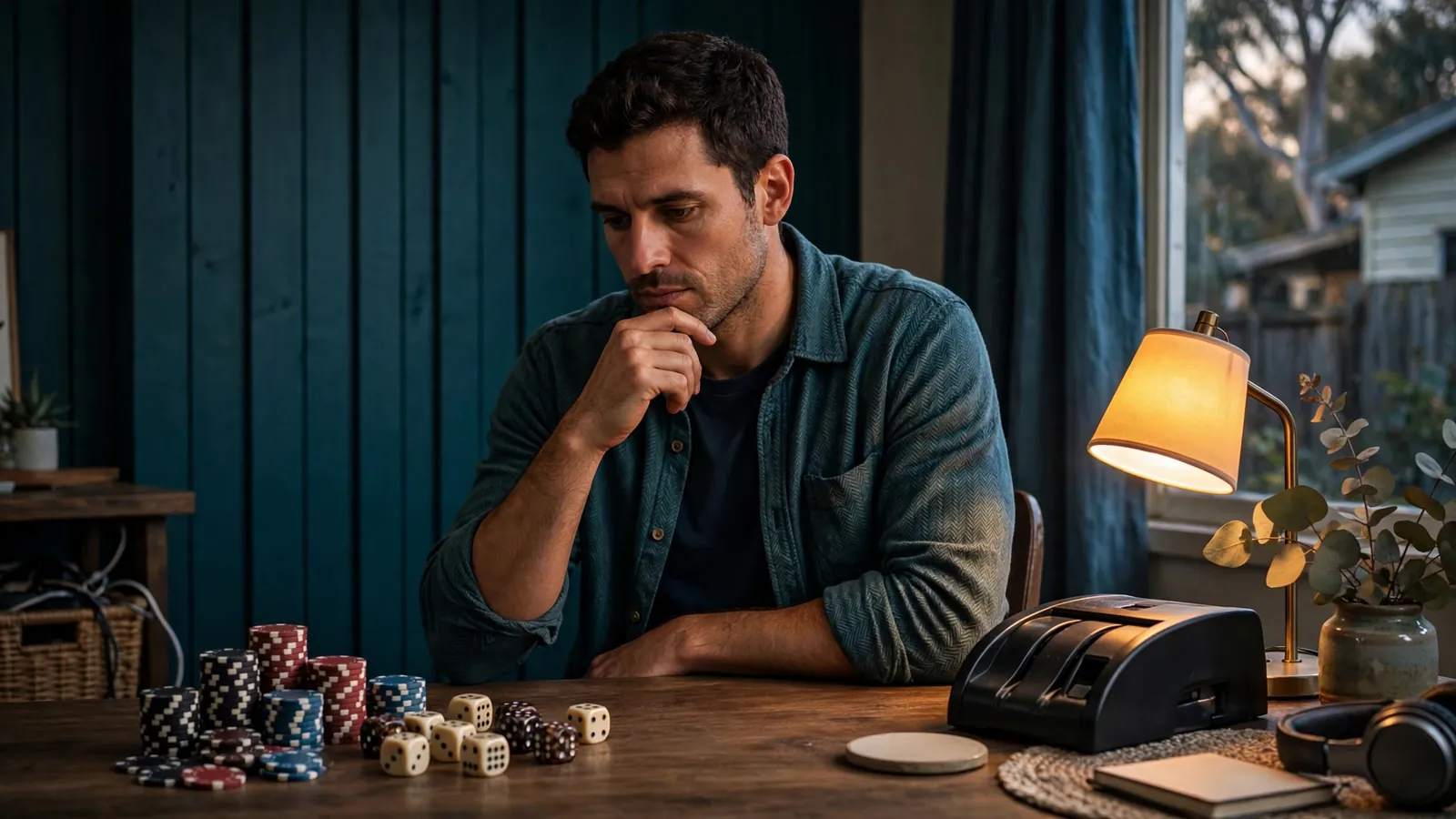
The scale is not small. Since ACMA made its first website-blocking request in November 2019, it has restricted access to 1,369 illegal gambling and affiliate websites. That figure includes affiliate sites as well as gambling services, so it is not a count of casinos alone. Still, it shows why a familiar name or a page that loaded last week is not proof that the same address will keep working.
What a block means in practice
ACMA’s request is directed to internet service providers. A block can therefore affect whether a site opens through a particular Australian connection. You might see an error page, a connection failure or another indication that the address cannot be reached. The exact message is not, by itself, a reliable explanation of what has happened.
I would not treat a failed page as a cue to hunt for a replacement address. A site may have changed its domain, or a technical issue may be involved; either way, trying another route does not establish that the service is permitted to operate in Australia. Access is not authorisation. That distinction matters more than whether a page happens to load.
ACMA’s role is also not the same as a site’s own assurance that it is “available to Australians.” That phrase describes what the operator claims, not what Australian enforcement allows. A blocked address is a direct reminder that access can be affected, but an unblocked address is no clearance certificate.
VPN Risks
Using a VPN to bypass blocks may lead to voided winnings, account closure, and the loss of your deposit.
If you see advice to use a VPN to get around a block, take the risk seriously: doing so may lead to voided winnings, account closure and loss of your deposit. I would not treat a technical workaround as protection. Unlicensed gambling services lack Australian consumer protections, and Australian laws may not help you recover winnings if an operator withholds them.
Why access can change
Website blocking is one of the ways ACMA responds to illegal online gambling services. Because the regulator can ask providers to block relevant sites, access is not something an offshore operator can promise permanently to Australian customers. A working link today does not settle what will happen tomorrow, and a site’s own notice about access cannot override a block request.
That can be frustrating when you have saved an address or created an account. It is also a reason not to make decisions based only on whether you can get through to the homepage. A polished design, a working cashier page or a customer-support chat does not tell you whether ACMA has sought to block the service, or whether your access may later be disrupted.
The number ACMA reports is useful in that limited sense: it gives context for the regulator’s blocking activity over time. It does not tell you that every offshore casino has been blocked, and it does not identify a particular site’s status. Don’t stretch the statistic into a site-by-site verdict.
If you need to check what gambling services are legal in Australia, ACMA directs players to its website and the national register for information about legal products. That is a better starting point than relying on a casino’s own claim or assuming that an accessible page is an approved one. A block is about access; it is not a consumer review, and the absence of one is not an endorsement.

I used to think a site that opened normally had passed some kind of local test. It hadn’t. A page loading is just a page loading. ACMA’s blocking powers mean that access can be cut off, and an offshore casino’s continued online presence should never be read as permission to offer gambling services to people in Australia.
What a Curaçao Casino Licence Does—and Doesn’t—Tell You
When an Australian sees a casino describing itself as licensed in Curaçao, the phrase can sound like a clear answer to a complicated question: is this site legitimate, and can I use it? I used to treat a licence badge as if it settled both. It doesn’t. The badge is a claim about an offshore licence; by itself, it does not establish what the licence covers, whether it is current, or whether it is valid.
That distinction matters because the word “licensed” can carry more weight than the information beside it supports. A logo or a line in a footer is not the same as independently checking a licence. And even if an operator has an offshore licence, that alone does not show that it is authorised to offer online casino games to people in Australia. Those are separate questions.
Read the claim, not the confidence
A Curaçao casino label may be used to describe where an operator says it is licensed. It does not, on its own, tell you how the operator handles disputes, what rules apply to a particular account, or whether the site is permitted to serve Australian customers. I would not fill in those details based on a badge, a polished “about us” page, or a confident-sounding line of advertising.
A Curaçao casino label describes where an operator says it is licensed, but it does not confirm how disputes are handled or if the site is permitted to serve Australian customers.
Nor should the phrase be treated as proof that every site using it has the same status. A general claim about a location is not a check of a particular operator’s licence. If a site makes a specific claim, the sensible starting point is to look for information that identifies the operator and the licence it says it holds, rather than relying on the design of the badge. If you cannot establish what the claim refers to, take it as unconfirmed.
That is not a verdict on every Curaçao casino. It is a limit on what the label itself can tell you. I have made the mistake of letting one reassuring word do the work of actual checking. It didn’t.
An offshore claim is not Australian permission
The Australian context is different. Under the Interactive Gambling Act 2001, operators cannot provide real-money online casino games to people in Australia. An offshore licensing claim does not change that rule or turn an offshore casino into a service licensed in Australia.
For a service that falls within the Australian wagering framework, ACMA’s public register is where Australians are encouraged to check whether it holds a valid Australian licence. That check is about Australian status; it is not a way to validate a Curaçao licence. Keeping those two questions separate prevents a familiar muddle: treating a foreign badge as if it were local approval.
A site can present its offshore status in a way that looks official, but appearance does not settle what Australian rules allow. The practical point is simple: do not read “licensed in Curaçao” as “approved for Australian players.” The words are not interchangeable.
What the phrase cannot promise you
A licence claim is not a guarantee that a site will be accessible, that an account will be accepted, or that a dispute will be resolved in your favour. It also does not establish that Australian consumer protections apply. If an unlicensed gambling service withholds winnings, Australian laws may not assist you; unlicensed services lack the protections that come with an appropriate local authorisation.
I would also avoid trying to get around an access restriction with a VPN. Using one to access a casino may lead to winnings being voided, an account being closed, or a deposit being lost. That is a poor trade for an uncertain claim on a screen.
None of this requires assuming that every operator is dishonest. It means the claim has boundaries. A location name and a licence badge cannot, by themselves, answer questions about Australian permission, account treatment, or recourse if something goes wrong. Don’t stretch the label.
When I see “Curaçao licensed” now, I read it as a statement that needs context, not as a recommendation. I check whether the operator identifies its status clearly, then keep that separate from the Australian question. If the wording blurs the two, I don’t give it the benefit of the doubt. A badge is not a local licence.
Licensed in Curaçao Is Not the Same as Licensed in Australia
The word “licensed” can sound like a clear answer. It isn’t, unless you know who issued the licence and what it permits. A casino website may display a Curaçao licence claim, but that does not make the operator licensed in Australia or authorised to offer online casino gambling to people here. Those are separate questions.
An offshore licence claim is not a substitute for Australian authorisation and does not mean the operator is licensed in Australia.
I used to treat a licence badge as a kind of all-purpose stamp: if a site showed one, I assumed someone had checked the whole operation for Australian players. That was too generous. An offshore licence claim says nothing by itself about whether the operator can legally provide its service in Australia. It is not a substitute for Australian authorisation.
Two different meanings of “licensed”
When an Australian asks whether a site is licensed, the useful question is not simply whether the website displays a badge. It is whether the service has a valid Australian licence for the kind of gambling it offers. The licence named on a site and the permission needed to serve customers in Australia are not interchangeable.
That distinction matters even when the offshore claim looks formal. A logo, certificate image, licence number or sentence in the footer can be presented as evidence, but the appearance of those details does not establish that the operator is licensed in Australia. Nor should you assume that an offshore licence overrides Australian law. It doesn’t.
For wagering services that are eligible to operate here, Australians are encouraged to use ACMA’s public register to check whether the service holds a valid Australian licence. ACMA has also pointed people to its website and the national register for information about legal gambling products. That check is about Australian licensing status; it is not a way to confirm every claim a Curaçao casino makes about itself.
So keep the questions separate. “Does this website claim an offshore licence?” is one. “Is this service licensed in Australia?” is another. A yes to the first does not answer the second.

Don’t let a badge do the checking
If a site publishes a licence number, don’t treat the number as proof just because it is printed beside a seal. Check any Australian licence claim against the official regulator’s public information. If the number cannot be verified there, walk away from the claim. A polished page can still leave you with no reliable answer.
And be precise about what you are checking. The Australian public register is relevant to whether a wagering service holds an Australian licence. It does not turn an offshore casino licence into an Australian one, and an offshore badge is not evidence that a casino is listed as an authorised Australian service.
I find this distinction less exciting than a shiny badge. More useful, though. The badge is what the operator wants you to notice; the jurisdiction and scope are what you need to understand.
What the distinction means for you
An operator’s use of the word “licensed” can leave out the detail that matters most to an Australian reader. Ask: licensed by whom, for what service, and for which market? If the answer only points to Curaçao, it has not established Australian licensing. Don’t fill in that gap yourself.
This is not a technicality. Australian law does not allow operators to provide real-money online casino games to people in Australia, and an offshore licence claim does not change that position. A foreign badge cannot make a prohibited service authorised here. “Licensed somewhere” is not the same as licensed in Australia.
- Use ACMA’s public register to check Australian licensing status
- Keep jurisdiction and scope of a licence separate
- Treat a foreign badge as local approval
- Use a VPN to get around access restrictions
There is also a practical limit to the reassurance a licence badge can offer. If an unlicensed service withholds winnings or creates a dispute, Australian laws may not help you recover the money. A badge does not guarantee a particular outcome, and it does not establish that Australian consumer protections apply.
Avoid using a VPN to get around access restrictions. Doing so may lead to winnings being voided, your account being closed, and your deposit being lost. That is a poor trade for a site whose Australian status has not been established.
I’m not saying every claim on a website is false. I’m saying the word “licensed” needs a jurisdiction attached to it before it means anything useful to you. For Australian licensing, use ACMA’s public register and rely on what it actually confirms—not on a Curaçao label presented as though it were local approval. A badge is not permission.
How to Assess a Casino Site Without a “Best” List
A list of the “best” Curaçao casinos sounds useful until you ask what the ranking is actually based on. A badge, a polished homepage and a confident claim about licensing do not tell me whether a site is authorised to serve people in Australia. I’m not going to turn a collection of names into a recommendation when the important question is whether the service is licensed in Australia.
That also means I can’t responsibly publish a Curaçao casino list as if it were a checked shortlist. A list can look like research even when it only repeats operators’ own claims. And a ranking can make those claims feel more trustworthy than they are. I’ve learned not to mistake tidy presentation for evidence. It’s an easy trap.
Start with the Australian register
For an Australian reader, the relevant check is whether a wagering service holds a valid Australian licence. ACMA’s public register is the place to verify that. Treat it as a check, not a seal of approval for every kind of gambling: a service appearing in a register does not, by itself, establish that it may offer online casino games to Australians.
If a site presents an offshore licence as its main credential, that does not answer the Australian licensing question. Nor does a page describing itself as a “trusted” or “top” casino. Those are promotional labels, not a substitute for checking the service against Australian licensing information. If you cannot establish that it holds the relevant Australian licence, don’t treat the claim as settled.
The distinction matters more than how many games a site displays or how sleek its account page looks. A directory of offshore casinos might be convenient to browse, but convenience is not the same as a lawful option for someone in Australia. I would rather leave a list blank than make it look like a safe route.
What a list can’t settle
Even a carefully formatted directory can’t establish that a particular site is permitted to offer casino gambling here. It can’t make an offshore claim equivalent to an Australian licence, either. So the number of entries, the order they appear in and the confidence of the wording are no proof. A ranking is especially misleading when it gives the impression that one offshore option is the right choice for Australian players.
Unlicensed gambling services lack consumer protections, and Australian laws may not assist you if winnings are withheld. That is a serious downside, not a minor detail to bury beneath a star rating. Using a VPN to reach a casino may also lead to voided winnings, account closure or loss of a deposit. Don’t treat a VPN as a workaround.
Licensing Verification
No ranked list or offshore badge can replace a direct check of the ACMA public register for Australian licensing status.
I know the temptation: you want a shortlist, not another task. But a shortlist without a reliable Australian authorisation check can do the opposite of helping. Check ACMA’s public register for a wagering service’s Australian licence status, and don’t read an offshore badge or a “best” label as proof that an online casino is licensed in Australia. If the register check does not establish the licence, walk away from the claim. No ranked list can make that uncertainty disappear.
Casino Games and the Australian Rules
The game itself matters. In Australia, online slots and casino games such as blackjack are illegal when offered to people here. Calling a service a Curaçao casino, or describing its games as international, does not change that Australian rule.
I used to treat the game menu as the main thing to check: slots, blackjack, roulette, poker, whatever I felt like playing. But a familiar title or polished table does not tell you whether the service can legally be provided in Australia. The law concerns the online casino service, not whether a particular game looks ordinary or whether you have seen it elsewhere.
That distinction is easy to miss when a site puts the games front and centre. A slot may be presented as entertainment, and blackjack may look like a simple card game, but when they are offered online for real money to people in Australia, they fall within the prohibited casino-gambling category. The wording on a button does not make the service a different thing.

Nor does the game’s location on a page settle the question. A section labelled “live casino,” a list of table games, or a virtual slot lobby is still part of an online casino offering. I learned not to let a familiar interface distract me from the basic point: the Australian rule applies to the service being offered, not just to its branding.
This is narrower than judging a site’s safety or checking what a licence badge claims. Those are separate questions. Here, the starting point is the kind of gambling on offer. If you are in Australia and the service is online slots or casino games such as blackjack, the relevant rule is that those games cannot legally be provided to you.
So when you see an offshore site’s casino menu, don’t read the presence of a game as permission to use it from Australia. The menu tells you what the operator is offering; it does not override Australian law. I wish I had made that distinction before letting a familiar game name do the thinking for me.
A game label can feel reassuring because it is specific. It is not a legal green light. The rule is blunt.
Safety Claims Need More Than a Licence Badge
A badge marked “secure” can look reassuring, but it is a claim to inspect, not proof that every part of a site is safe. I’ve learned to separate basic technical measures from broad promises. Encryption can protect information while it travels between your device and a site; it cannot tell you how the operator stores that information, who can access it, or what happens if there is a dispute.
Required KYC Documents
A request for identity verification may include photo identification, proof of your address, and evidence that you own the payment method used.
Casinos use SSL encryption to safeguard transactions and sensitive details. Before entering personal or payment information, check that the browser shows a secure connection and that the site address is the one you intended to visit. That is a practical check, not a guarantee. A secure connection does not establish that a casino is trustworthy or that its services are permitted in Australia.
Identity checks are another part of account security, though they can also involve handing over sensitive documents. Casinos conduct KYC checks and require identity verification before withdrawals. A request may include photo identification, proof of your address, and evidence that you own the payment method used. Read the operator’s explanation of how to submit those documents and handle the account carefully: don’t send them through an unexpected message or a link you cannot verify.
That paperwork is not a safety certificate. It shows what the operator asks customers to provide; it does not establish how well the documents are protected or what help you can get if something goes wrong. Nor does a licence badge, on its own, answer those questions. I used to treat official-looking symbols as a shortcut. Bad shortcut.
There is also a difference between protecting data and protecting you as a customer. Offshore services lack Australian consumer protections, and Australian laws may not assist if an operator withholds winnings. Using a VPN to reach a casino may also lead to voided winnings, account closure, and loss of your deposit. That risk does not disappear because the site uses encryption or displays a badge.
So when you assess a security claim, look for specific information about the connection, identity checks, and document handling rather than relying on a label. Keep account details private, and be cautious about requests for extra personal information. These checks can help you understand what a site does with your data; they cannot turn a general claim of being “safe” into a guarantee.
Crypto Casino Claims and the Australian Context
Crypto can make a casino’s payment pitch sound like a separate category. It isn’t a separate legal route into the Australian market. If a service takes real money for online casino games from people in Australia, changing the payment method to cryptocurrency does not change what the service is. The Interactive Gambling Act 2001 still applies to the operator.
I used to treat a payment option as a clue about how a site worked. That was a poor shortcut. A coin logo, a wallet address or a claim about quick transactions tells you nothing, by itself, about whether the operator may offer casino gambling to Australians. Nor does it establish that a service has Australian authorisation.
ACMA is Australia’s primary online gambling regulator. It can take action against operators that breach the Act, including blocking websites and issuing fines. So a crypto casino’s ability to load today is not proof that it is permitted to serve Australian customers, or that access will remain available. Access can change. That is the part the payment pitch leaves out.
The same caution applies to claims about “top” Curaçao crypto casinos. A ranking or badge does not settle the Australian question, and I would not treat a Curaçao-related claim as permission to gamble here. The word “licensed” on a site is not a substitute for checking the Australian position.
Using cryptocurrency does not change the legal status of a service; the Interactive Gambling Act 2001 still applies to the operator.
There is also a practical downside to relying on a service outside the Australian framework: if it withholds winnings, Australian laws may not help you recover them, and an unlicensed gambling service does not provide Australian consumer protections. That is not a prediction about every operator. It is a reason not to mistake a polished payment page for recourse.
I would not use a VPN to get around a block. Doing so may lead to an account being closed, winnings being voided and deposits being lost. A workaround is not protection.
If the question is whether cryptocurrency makes an online casino acceptable for Australians, the answer is no. The payment rail does not rewrite the rules. Before acting on any gambling offer, consult ACMA and its public information about legal gambling products in Australia. I learned to separate the method of payment from the status of the service. They are not the same thing.
Why a “New” Casino Label Doesn’t Prove Anything
A “new” label tells you how a site wants to be seen. It does not, by itself, tell you when the service began, whether its details have been checked, or whether it will remain accessible to people in Australia. I’ve learned not to treat freshness as a quality mark. New can simply mean unfamiliar.
That matters when a site promotes itself as one of the new Curaçao casinos. The wording may sound like a useful filter, but it cannot answer the questions that matter to an Australian reader. A launch date is not evidence that a service is suitable for Australian residents, and a polished page is not proof of anything beyond its appearance. Keep the label in its place: a claim, not a recommendation.
Access can change, too. ACMA can issue a blocking order as a last resort when it considers customer safety to be at risk. That does not mean every new site will be blocked, or that a site still loading is therefore safe or acceptable. It means a website’s availability at one moment is a poor basis for confidence. A link working today settles very little.
I used to read “just launched” as a reason to look closer, as if being early meant finding something overlooked. That was the wrong shortcut. The label can make you curious; it cannot do the checking for you. Don’t let a countdown, a launch banner or the word “new” rush you into handing over details or money.
The duller approach is better: pause, look at the claims critically, and remember that a site can become inaccessible. No freshness badge changes that. A new label is not a safety signal.
Online Casinos, Curaçao, and the Meaning of “There”
“There” can mean two different things: casinos physically located in Curaçao, or online casino websites associated with the island. Those are separate questions. The Australian rules establish what operators may offer people here; they do not tell you what venues exist in Curaçao.
I can’t use the Australian position to make claims about land-based casinos on the island. It would be a guess to treat an offshore website’s connection to Curaçao as proof that a physical casino is there, too. A place name on a webpage is not a map.
For Australians, the relevant point is narrower. Under the Interactive Gambling Act 2001, operators based in Australia cannot provide online casino games to residents. That rule concerns online services offered here; it does not answer whether Curaçao has brick-and-mortar casinos, nor does a physical venue there establish anything about online access from Australia.
I used to let a familiar place name do too much work. “Based in Curaçao” sounded like a concrete detail, when it could leave the important question unanswered: what service is being offered to someone in Australia? The wording alone cannot settle that.
So keep the geography and the online rules apart. If you mean casinos you could visit on the island, the Australian online-gambling rule does not establish whether they exist. If you mean a website serving Australian players, the local law is the relevant frame, not the site’s use of Curaçao in its description.
Different “there.” Different question.
What are the legal consequences for Australian players using offshore casinos?
The Interactive Gambling Act 2001 prohibits domestic operators from offering online casino games to Australian residents, but it does not explicitly make individual use of offshore casino sites a criminal offence. That distinction does not mean an offshore licence authorises the service in Australia or guarantees you can recover withheld winnings.
What responsible gambling tools and support services are available?
Licensed operators offer deposit limits that you can set daily, weekly or monthly. Reputable platforms also provide information about gambling-related harm and direct you to professional support services in Australia.
How long should a withdrawal take from a secure casino?
Once approved and released, a PayID transfer can clear within minutes. Bank transfers and card withdrawals can take several business days; card timing or availability can vary with the payment processor.
What documents might be needed for verification?
You may be asked for photo ID, proof of address and proof that you own the payment method used.
Prepared by the SpinBetter Casino editorial staff.