





Online Casino Payment Methods for Australians
 Available in AU
Deposit availability does not guarantee the same method can receive a withdrawal, so compare both directions and their conditions.

Table of Contents
- Payment options are not the same as cash-out options
- PayID and BPAY in the Australian banking mix
- Instant does not always mean usable
- Payment gateways: the handoff behind a transaction
- Payment systems that trade speed for control
- Choose the payment route around the withdrawal
- Provider fees and the cost of moving money
- Cashouts, crypto timing, and the fine print
- Payment apps and the checks that can delay a withdrawal
- Paying by phone: what the digital wallet actually does
Payment options are not the same as cash-out options
A payment page can make a method look like a complete solution: choose it, move money in, and later take money out the same way. That neat picture is not something to assume. A specialist review notes that a casino may offer different methods for deposits and withdrawals, and the options can change. Treat the two directions as separate questions, not as one feature with two buttons.
A deposit is money going from a payment source towards an account. A withdrawal is money moving back out, and the site may set different rules for that step. A method shown beside “deposit” does not, by itself, tell you whether it appears on the withdrawal page, whether it can receive a payout, or what conditions apply. That gap is easy to miss when the first screen is designed to get you through a payment quickly.
I used to read a row of familiar logos as a kind of promise. It was not. A list of online casino payment options can describe only what the site accepts at the point of funding. It is not a complete map of the route back to your bank or payment account. The only useful comparison is one that checks both directions and the rules attached to each.
Choosing a casino payment method means checking the details that affect your own deposits and withdrawals, not just the payment option’s name. Use these operator notes to see which payment-related facts are available before deciding what to check next.
License: Curacao Gaming Control Board OGL/2023/176/0095 (Hollycorn N.V.) LuckyVibe is listed with a Curaçao Gaming Control Board licence held by Hollycorn N.V. The available details do not specify payment methods or transaction times.
License: Curacao Gaming Control Board OGL/2023/176/0095 (Hollycorn N.V.) Neospin is listed with a Curaçao Gaming Control Board licence held by Hollycorn N.V. No payment methods or processing times are specified in the available details.
License: Curacao eGaming OGL/2023/174/0082 (Dama N.V.) · Min. deposit: A$15 LevelUp Casino has a stated minimum deposit of A$15 and is listed with a Curaçao eGaming licence held by Dama N.V. The available details do not specify payment methods or payout times.
License: international iGaming licence – jurisdiction not named in the source · Payout speed: PayID 1-24 hours · Min. deposit: A$30 (PayID from A$10) House of Pokies lists PayID payouts in 1–24 hours and a minimum deposit of A$30, or A$10 when using PayID. Its licence is described as international, with the jurisdiction not named.
License: Curacao Gaming Control Board OGL/2023/174/0082 (Dama N.V.) SpinsUp is listed with a Curaçao Gaming Control Board licence held by Dama N.V. No payment methods, deposit minimums or payout times are specified in the available details.
License: Curacao eGaming (Roby Games Ltd) Roby Casino is listed with a Curaçao eGaming licence held by Roby Games Ltd. The available details do not specify payment methods or transaction times.
License: Curacao · Min. deposit: A$20 (POLi) Lucky Dreams lists a A$20 minimum deposit for POLi. It is also described as Curaçao-licensed.
Payout speed: crypto under 1 hour, PayID 1-3 business days · Min. deposit: A$20 (A$30 to qualify for the bonus) Ricky Casino lists crypto payouts in under an hour and PayID payouts in 1–3 business days. Its minimum deposit is A$20, rising to A$30 to qualify for the bonus.
License: Curacao Gaming Authority (Jumpman Gaming Ltd) DragonSlots Casino is listed with a Curaçao Gaming Authority licence held by Jumpman Gaming Ltd. No payment methods or transaction times are specified in the available details.
Payout speed: crypto 30-120 minutes, fiat 24-72 hours · Min. deposit: A$30 MrPacho lists crypto payouts in 30–120 minutes and fiat payouts in 24–72 hours, with a minimum deposit of A$30.
That distinction matters even before you think about speed or convenience. If you put money in through one route but the operator requires a different route for a payout, you may have to arrange another payment account or follow a separate process. A method can be easy to select and still leave you without the cash-out route you expected. Read the withdrawal information before making a decision; do not infer it from the deposit menu.
There is also a legal reality that comes before any payment comparison in Australia. The Interactive Gambling Act 2001 prohibits operators from providing real-money online casino services, including pokies, poker and table games, to people in Australia. Offshore casino services are subject to active blocking and enforcement. A payment page or a list of casino payment solutions does not make such a service lawful, locally licensed or endorsed. I would not treat a working-looking checkout as proof of any of those things.
The same caution applies to phrases such as “all-in-one” or “seamless”: the sales wording may describe how a deposit is initiated, not whether withdrawals are supported through the same channel. Check the operator’s published withdrawal terms and the payment provider’s own rules. If the cash-out route is unclear, that is not a minor detail to sort out after paying. It is a reason to stop rather than assume the missing information will resolve itself.

This is also why a phone payment, a bank-linked option, a voucher, an e-wallet or a cryptocurrency mention should not be lumped together as interchangeable ways to move money. They are different systems, and a name appearing somewhere on a payment page does not establish what it can do in both directions. In particular, a reference to cryptocurrency should not be read as a recommendation to use it to fund online wagering. The payment label alone tells you too little.
The practical test is plain: separate “Can this page take money?” from “How, if at all, can money be returned?” Then read the terms for each direction instead of trusting a badge, logo or headline. I have learned to distrust the tidy menu. One side is not both.
PayID and BPAY in the Australian banking mix
PayID can sound like a separate payment account, but the underlying link is to an Australian bank account. A mobile number, email address or ABN can be connected to that account through the New Payments Platform, so a transfer can be addressed using the linked detail rather than traditional bank-account information. Every major Australian bank supports PayID. That describes the banking network; it does not mean every merchant or payment destination accepts it.
PayID
A mobile number, email address or ABN connected to an Australian bank account via the New Payments Platform, allowing transfers without traditional bank-account information.
There is an important legal boundary here. Under the Interactive Gambling Act 2001, operators cannot lawfully provide real-money online casino games, including pokies, to people in Australia. Payment descriptions on offshore sites, or in reviews of them, are not proof that the service is lawful or that it is appropriate to use. I would treat a payment label as a claim about what a particular operator says it accepts, not as a recommendation.
Availability can vary at the operator level. A specialist review describes PayID as a primary Australian-dollar deposit route at many offshore operators, but that is a time-sensitive description, not a guarantee about any particular site. The same kind of review notes that PayID may be offered for deposits while withdrawal support is separate. A bank connection alone cannot settle that question: the operator determines which transaction types it says it will process, and those details can change.
That distinction is easy to miss when a payment screen makes the process look like one simple bank transfer. PayID describes how a payment can be addressed through the banking network; it does not establish what the receiving service is legally allowed to offer in Australia. Nor does a deposit option tell you what happens when money is sent back. I learned to read the destination and purpose of a payment, not just recognise a familiar bank feature. Familiar is not the same as suitable.
BPAY works differently in practice. It is a bill-payment system rather than a real-time transfer route, and a specialist review puts the processing window for casino-related BPAY payments at one to two business days. That timing is a reported estimate, not a promise for every transaction. It is also a poor match for anyone expecting funds to appear immediately: the payment can be initiated through familiar banking channels while still taking time to reach its destination.
The contrast, then, is not simply “modern” against “old-fashioned.” PayID uses a linked identifier within the New Payments Platform, while BPAY follows a bill-payment process with a slower stated timeline. But neither label makes an offshore gambling service lawful for Australians, and neither should be read as an assurance that a transaction will be accepted. A payment method can be technically supported by a bank and still be unavailable or unsuitable at the receiving end.
When you see PayID or BPAY mentioned among Australian casino payment methods, keep the two questions separate: what does the bank network support, and what is the operator claiming to accept? The first can explain the mechanics; it does not answer the second, and it does not change the law. Familiar name. Different implications.
Instant does not always mean usable
“Instant” describes how quickly a payment might be processed when it works. It does not tell you whether the transaction is permitted, available from an Australian bank, or suitable for the purpose shown on a payment screen. I used to treat a fast confirmation as proof that the route was dependable. It proves less than that.
A specialist review reports that Visa and Mastercard deposits can be processed instantly. That is a statement about transaction speed, not a guarantee that an Australian card will be accepted. The same type of review reports that many standard Visa and Mastercard transactions to offshore casinos are blocked by Australian financial institutions. A payment can therefore look quick on paper and still fail at the first hurdle.
Legal Prohibition
Under the Interactive Gambling Act 2001, it is illegal for operators to provide real-money online casino games, including pokies, to people physically in Australia.
There is a more important boundary than speed. Under the Interactive Gambling Act 2001, it is illegal for operators to provide real-money online casino games, including pokies, to people physically in Australia. A payment badge or a completed transaction does not make that service lawful. Nor does a payment screen establish that an operator can provide the service in Australia.
That distinction is easy to miss when an interface labels a method “instant” or displays a familiar card logo. The label may describe the intended processing time, while the bank’s decision and the service’s legal status are separate matters. A failed card attempt is not necessarily a technical glitch to work around; it may reflect a restriction applied by the financial institution.
So I would not read “instant casino payment” as a recommendation or as evidence that a route is usable for Australian online wagering. It is only a speed claim, and a narrow one. The card may be processed quickly where accepted, yet the transaction can still be blocked. Fast is not the same as available.
Payment gateways: the handoff behind a transaction
A payment gateway is the processing layer between the method you select and the account that is meant to receive the money. The screen can make that handoff look like one step: choose a route, enter the details, tap confirm. In practice, the payment may pass through several checks and systems before the receiving account is updated. A confirmation on your side is not proof that the other side has finished processing it.

I learned to stop treating “submitted” as “done”. It tells you the request has been sent, not necessarily that it has cleared or been credited. If something stalls, the delay may sit with the payment processor, a bank, or the site’s own handling queue. That distinction matters more than the polished checkout screen suggests.
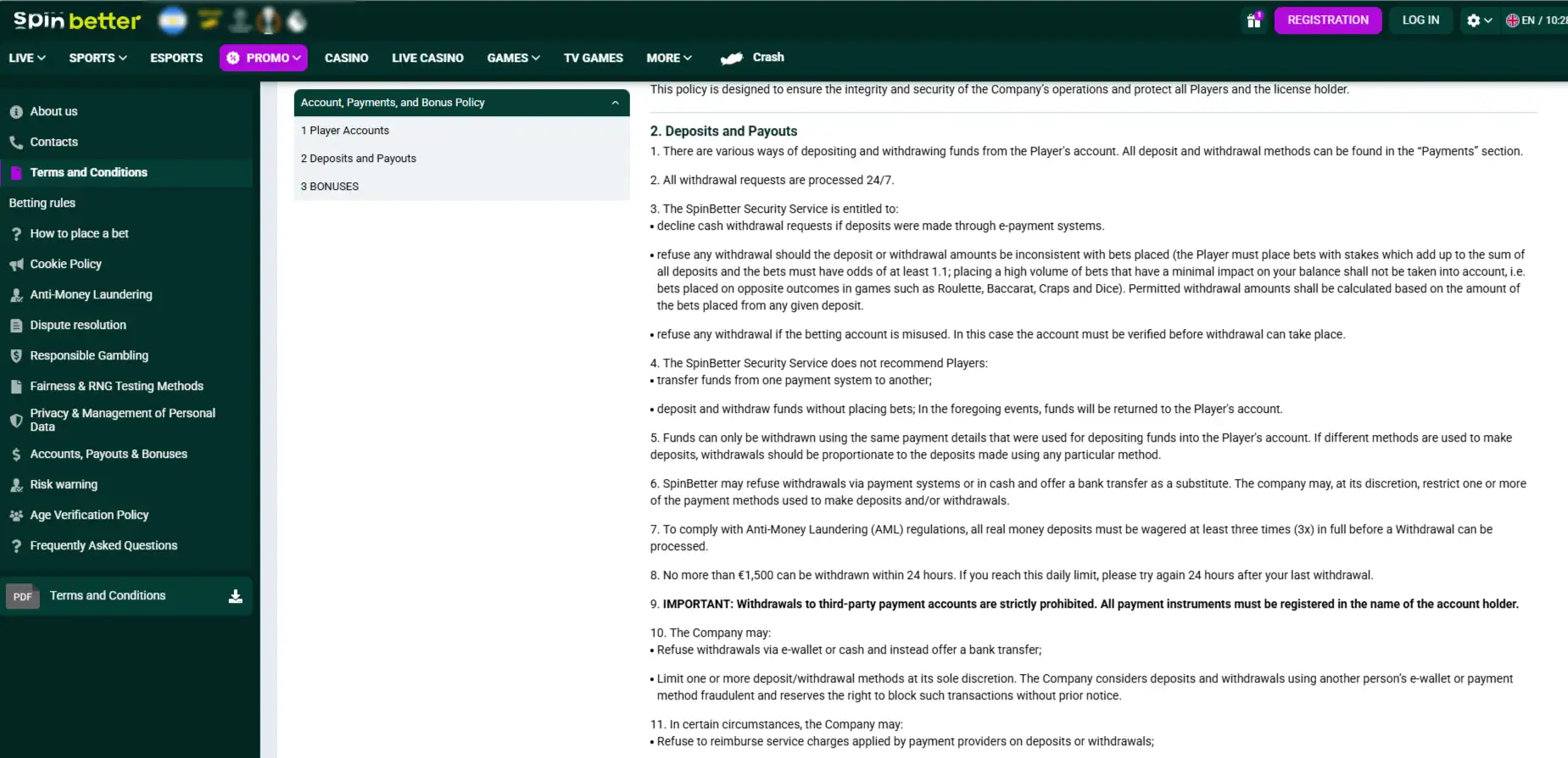
With bank transfers, the transfer itself is only part of the timeline. A specialist review describes some casino bank withdrawals as being handled manually once or twice a week; in its example, a request made on Friday could arrive by Wednesday. That is a reported process, not a timetable you can assume every operator follows. The useful question is whether a transaction is waiting for the bank, waiting for a manual review, or has not yet been released for payment.
There can be a cost at that handoff too. A specialist review reports flat bank-transfer withdrawal fees of $5–$15 at some casinos. It also describes crypto withdrawals as commonly having no casino fee, but that comparison does not make crypto a deposit recommendation, and a zero operator fee does not mean there can be no network cost. The figures and practices are specific to the review’s account, so check the terms that apply to the service in front of you rather than budgeting from a general claim.
May be handled manually once or twice a week, with some reported withdrawal fees ranging from $5 to $15.
Commonly features no casino-side withdrawal fees, though network costs may still apply.
A gateway can also be the reason the amount displayed at the start does not match what reaches the account. A fee may be taken during processing, or a transaction may remain pending while the relevant parties complete their part. Before confirming, look for the stated fee, the expected processing stage, and what the status labels mean. If the wording is vague, save the confirmation and ask support which party currently has the transaction.
That is the unglamorous side of casino payment technology: it coordinates a request; it does not erase the rules or delays of each institution involved. Apple Pay and Google Pay are names you may see in payment discussions, but a wallet button does not explain who processes a particular transaction or how it is handled. Klarna is not a shortcut around those steps either. The method’s name is only the front door.
Keep records. Note the time you submitted a request, the reference number, the amount and any stated fee. If the transfer takes longer than the site’s own estimate, those details make it easier to ask a precise question instead of starting from scratch. Screenshots help. The handoff is the part worth checking.
Payment systems that trade speed for control
A payment method can change the feel of a transaction without changing what the money is for. A bank-bill option and a prepaid voucher work in different ways: one can sit in reserve when another bank route is unavailable, while the other limits what you can put in by limiting what you load. Neither label tells you, by itself, how a later withdrawal will work.

BPAY is a bill-payment system, so it is not built around money arriving in time for real-time play. A specialist review describes it as a possible backup when PayID is unavailable, rather than a route for keeping a live session funded. That distinction matters in practice. If your first-choice transfer is not offered or does not work, BPAY may be presented as another way to make a payment, but it involves a different payment rhythm. It is a fallback, not a faster version of the same thing.
I have learned not to read “backup” as “interchangeable”. A payment screen can make two options look like simple alternatives, but the steps you take are not identical. With a bill-payment route, you follow the payment instructions associated with the bill. With a voucher, you use value that has already been loaded. Check the instructions shown for the specific service rather than assuming one method will behave like another.
A prepaid voucher has a straightforward spending boundary: you can only use the value loaded onto it. That can make it easier to stick to a chosen amount, because the payment is constrained by the voucher balance rather than drawing additional money from a linked bank account. It is a cap on that payment route, not a guarantee about your overall spending. Using more than one voucher, or switching to another payment method, changes the picture.
- Use prepaid vouchers to set a strict spending boundary
- Use BPAY as a backup when PayID is unavailable
- Assume a voucher deposit can be returned via the same voucher
- Expect real-time funding from a bill-payment system like BPAY
The catch is on the way back. Voucher deposits generally cannot be returned to the voucher as withdrawals, so the voucher does not provide a matching cash-out route. You would need a separate method to receive funds. I have made the mistake of focusing on how money goes in and treating the rest as a detail. It isn’t.
That also changes what “control” means. A voucher can put a limit on the amount available through that voucher, but it does not solve the withdrawal side. BPAY can provide another payment route when PayID is unavailable, but its bill-payment mechanics are not designed for real-time funding. They solve different problems; neither is a complete in-and-out system on its own.
In Australia, operators cannot lawfully provide real-money online casino games to people physically located here. The mechanics above describe payment features, not an endorsement or a suggestion to use them. If you encounter these options on a site, do not assume that the displayed deposit route also supports withdrawals, or that a payment method’s presence makes the service lawful. A cap is useful only if you understand what it caps.
Choose the payment route around the withdrawal
I used to judge a payment option by the deposit screen: if it appeared there and the money went in, I assumed the hard part was done. That was the wrong test. A way to fund an account does not, by itself, tell you how you could get money back out. A specialist review describes casino payment support as potentially different for deposits and withdrawals; treat the two as separate checks, not one promise.

There is an important legal boundary first. Under Australia’s Interactive Gambling Act 2001, it is illegal for operators to provide real-money online casino games to people physically in Australia. This isn’t a recommendation to find an offshore site or a workaround. If you encounter a payment page presenting casino funding options to Australians, don’t mistake a working payment button for proof that the service is lawful or that your balance has local consumer-law protection.
For general payment literacy, trace the whole route before acting: what the screen says about incoming payments, what it says about withdrawals, and whether the same method is supported in both directions. A specialist review notes that PayID deposit availability depends on the operator, while withdrawal support needs a separate check. That’s a useful distinction, not a claim that every site has the same setup.
The same caution applies to names that turn up in payment searches. A label such as POLi, Neosurf or Boku on a page does not establish that it is available, suitable, or usable for cashing out. PayPal is not a casino-payment alternative for Australians: it has explicitly prohibited gambling transactions in Australia since 2021. And cryptocurrency should not be read as a deposit suggestion here. Any mention of it in a withdrawal context is only about that separate, one-way possibility; blockchain transfers are irreversible and have no chargeback option.
A practical check is to read the payment terms before entering details, then look specifically for the withdrawal section. Confirm which methods it says can receive a payout, whether the account holder’s name must match, and what checks may apply. If the terms are unclear or the available exit route doesn’t suit you, stop there rather than sending money first and hoping to solve it later.
Verify Withdrawal Route
- Check if the deposit method is supported for withdrawals
- Confirm if the account holder’s name must match the payment record
- Read the specific terms regarding payout checks and restrictions
- Verify if the available exit route suits your needs before depositing
No magic button. The route matters.
Provider fees and the cost of moving money
A payment method’s name tells you little about what moving money will cost. A fee may be attached to funding a wallet, sending money to a bank, or converting currencies. Those charges are separate, so a headline saying a transaction is “free” would not necessarily describe the whole route.
There is an important legal limit here: under the Interactive Gambling Act 2001, operators cannot provide real-money online casino games to people in Australia. The figures below describe costs reported in specialist reviews, not a recommendation to use an offshore casino or a payment service for gambling.
A specialist review puts Skrill withdrawals to a bank at one to two days and reports that some casinos charge a transaction fee of one to three per cent. Treat that as a reported example, not a standing price: fees can depend on the casino and the route. Before relying on any quoted amount, identify who charges it and what part of the transfer it applies to. A wallet fee and a casino withdrawal fee are not interchangeable.
Currency conversion can add another layer. Converting Australian dollars to euros can cost two to four per cent. That cost can reduce the amount that arrives in the other currency, even if the initial payment screen draws attention only to the transfer itself. Check which currency the account uses and whether conversion is part of the transaction, rather than assuming the displayed balance and the money ultimately received are the same.
A specialist review also reports a 1.45 per cent Neteller fee for credit-card funding. That figure concerns funding a wallet; it is not a recommendation to use a credit card for gambling. Credit-card payments are not an acceptable deposit route for online wagering in Australia. The distinction matters: a provider’s published funding charge does not make the underlying payment appropriate or lawful for this purpose.
When I compare payment costs, I separate the route into stages: funding the payment account, moving money onward, withdrawing, and converting currency. Then I look for a fee at each stage and check whether the quoted timing refers to a wallet transfer or the bank leg. A withdrawal to a bank reported to take one to two days is not the same thing as a promise about every step before it.
Small print, real cost.
Cashouts, crypto timing, and the fine print
A withdrawal clock starts later than the button suggests. A request can sit in a casino’s review queue before the payment is sent, so the transfer method is only one part of the wait. I used to treat a “fast” label as a delivery estimate. It isn’t. The useful question is what happens after the request is submitted: who must approve it, how it is sent, and what can slow it down.
Withdrawal Timeline
You submit the withdrawal request through the casino interface.
The request sits in the casino’s review queue for manual or automatic approval.
The operator sends the funds via the chosen method (e.g., bank transfer or blockchain).
The funds are credited to your bank account or digital wallet after processing delays.
Bank transfers can involve manual processing rather than an automatic handoff. A specialist review describes some operators handling these requests once or twice a week; in its example, a withdrawal requested on Friday could reach the account by Wednesday. That kind of schedule makes the operator’s processing routine matter as much as the bank transfer itself. A request made outside the processing window may simply wait for the next review. Annoying, but not mysterious.
Cryptocurrency cashouts have a different clock. Specialist reviews give Litecoin withdrawal estimates ranging from ten to thirty minutes, while another reports a figure close to ten minutes. They also describe Bitcoin as slower, with congestion potentially stretching a transfer to an hour. Those are reported timings, not promises for a particular transaction. A quick estimate can change with network conditions, and the casino may still have to approve the request before anything reaches the blockchain.
That distinction is easy to miss. “Sent” can mean the operator has released a payment; it does not necessarily mean the receiving wallet has credited it. Specialist reviews also describe Bitcoin as the slower option compared with Litecoin, while characterising it as a choice associated with larger cashouts. I would read that as a description of how some reviews frame the trade-off, not as advice to use a particular asset or a guarantee that a larger withdrawal will move smoothly.
Fees deserve the same attention as timing. Ethereum gas charges can eat into a payout, reducing what remains after the transfer. The amount can depend on network conditions, so a displayed withdrawal value may not tell you the final amount received. With any cryptocurrency cashout, check the asset, network and destination address carefully before confirming. One wrong detail can be costly.
And there is no undo button. Blockchain transfers are irreversible: once a transaction has been sent, it cannot be reversed through a card chargeback. That is a different kind of risk from waiting on a bank transfer. Before confirming, I would check the address character by character and make sure the selected network matches the receiving wallet. A hurried click is a bad payment plan.
None of this makes cryptocurrency a deposit suggestion. Here, it matters only as a withdrawal mechanism and a way to understand the trade-offs in the cashout information a site presents. Nor does a short blockchain estimate remove the operator’s own review time. A request can be delayed before it is broadcast, while a bank transfer can be held up by a manual processing schedule.
When reading payment terms, separate the stages: request submitted, operator approved, payment sent, funds received. Then look for the stated method, possible charges, and the conditions attached to each stage. If the wording only says “fast,” it has left out the part you need. The fine print is the timetable.
Payment apps and the checks that can delay a withdrawal
A payment app appearing on a deposit screen does not tell you what will happen when you ask to withdraw. The two functions are separate. A specialist review reports that PayID deposits depend on the operator, and says withdrawal support needs to be checked independently. Treat that as a point to verify for the specific service, not a promise that the same arrangement applies everywhere.
Verification Delays
Identity and source-of-funds checks, including government ID and proof of address, can hold up your withdrawal while documents are reviewed.
The same caution applies to unfamiliar labels. Seeing EcoPayz, UPI or ACH mentioned in a payment menu does not establish that a particular operator accepts it, or that it can return money to you. Paysafecard has a clearer limitation: it may be used to pay, but it is not a withdrawal route. Don’t confuse a way to put funds in with a way to get them out.
Then there are identity and source-of-funds checks. A specialist review describes operators requesting government-issued identification, proof of address dated within three months, and evidence that the payment method belongs to you. Those checks can hold up a withdrawal while documents are reviewed. I’ve learned not to wait until a cashout request to discover that the name on an account or payment record doesn’t match.
Keep records that connect you to the payment method, and read the operator’s instructions before sending documents. Don’t send sensitive material through an unverified link or message; use the official account process and ask support how to submit it securely if that is unclear. A casino payment app can simplify the payment step, but it cannot bypass identity checks or guarantee a cashout path.
There is a bigger Australian context, too: under the Interactive Gambling Act 2001, operators cannot provide real-money online casino games to people in Australia. This is not a recommendation to use an offshore service. If you are assessing a payment screen, distinguish its advertised deposit options from withdrawal support and the checks attached to any transaction. The app is only one part of the process. Quite a few steps.
Paying by phone: what the digital wallet actually does
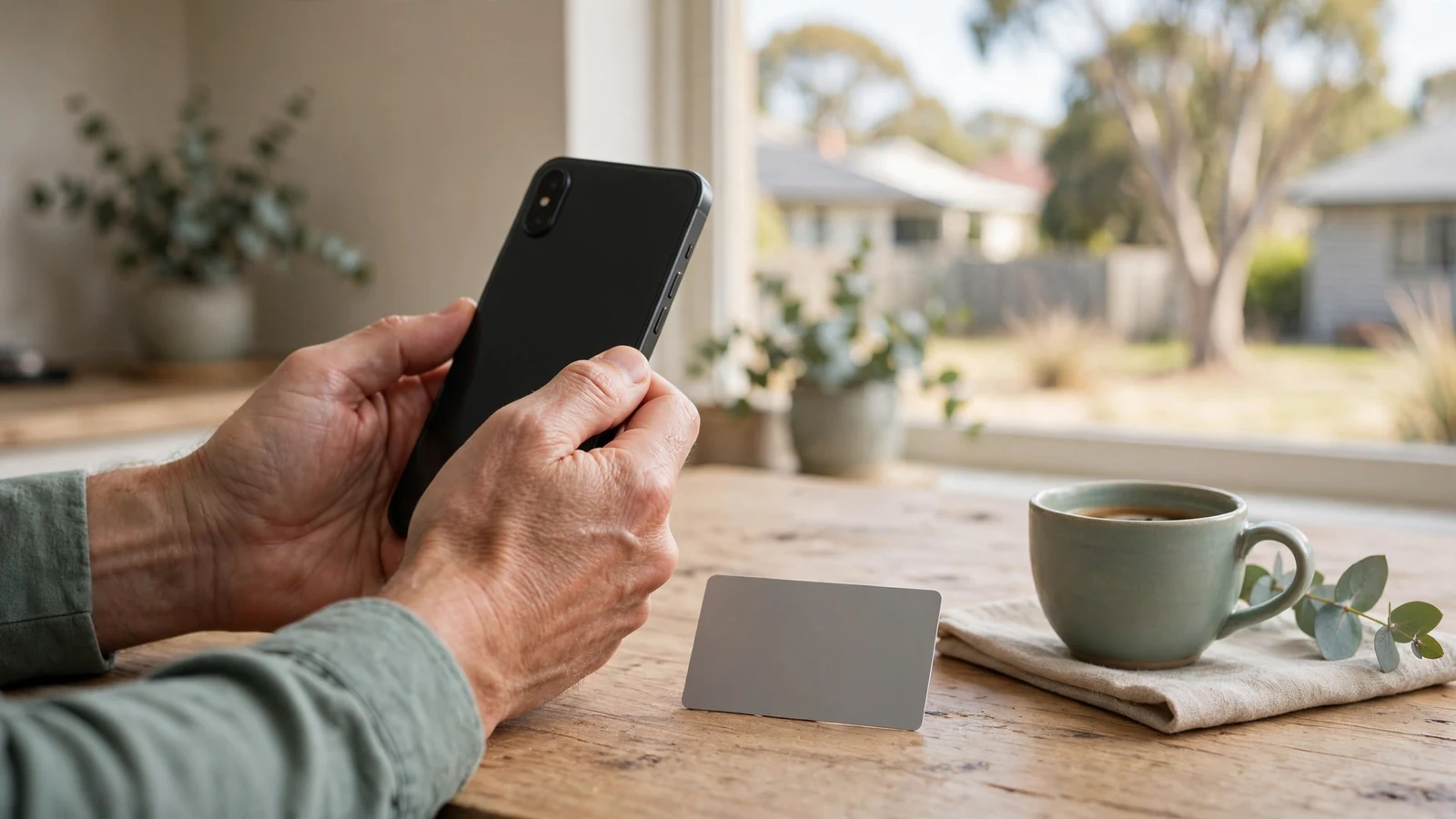
A phone can make a payment feel almost invisible: choose a wallet, confirm with Face ID or a fingerprint, and you’re done. But “one tap” describes the authentication step, not what the payment is for or what happens to the money afterwards.

A specialist review describes Apple Pay as a possible way to make a deposit through a phone’s digital wallet, with biometric confirmation. That is a deposit route, not a cashout route. Don’t assume that because a payment option appears on a cashier screen, it can also receive a withdrawal. Apple Pay should not be treated as a way to get money back out.
I’ve learned to read the button labels carefully. A mobile payment can mean paying from a phone, not using a distinct phone-only payment system. The wallet handles the payment confirmation; it does not settle questions such as whether a service can legally be offered in Australia, whether the operator accepts that method, or how a later withdrawal would work. Convenient tap. Different job.
There is an important Australian context here: under the Interactive Gambling Act 2001, operators cannot provide real-money online casino games—including pokies—to people in Australia. A payment feature does not change that rule, and this is not a recommendation to use an offshore casino.
If you encounter Apple Pay in connection with an online gambling service, don’t read its presence as an endorsement or as proof that the whole transaction path is available. In particular, don’t mistake phone-based biometric authentication for extra protection over the gambling service itself. It confirms your payment action; it does not make an unlawful service lawful or turn a deposit method into a withdrawal method.
The same distinction matters when you see names such as MuchBetter alongside phone-payment wording. A wallet brand and a phone’s built-in digital wallet are not interchangeable just because both can appear on a small screen. Check what the named method actually does, and keep deposit and withdrawal functions separate in your mind.
That’s the part easy to miss when the screen is designed to make paying feel effortless. A fast confirmation is only a fast confirmation.
What is the fastest withdrawal method for Australian online casinos?
Litecoin withdrawals typically take 10–30 minutes. Actual availability depends on the operator, so check its withdrawal options and terms.
Are instant payouts really instant?
Not necessarily. An instant deposit does not mean withdrawals are instant; Litecoin withdrawals typically take 10–30 minutes, while bank transfers may be processed manually once or twice a week.
What verification documents are needed for withdrawals?
You may be asked for government-issued identification, proof of address dated within three months, and proof of your payment method.
Can I use PayPal for online pokies in Australia?
No. PayPal has banned gambling transactions in Australia since 2021.
Created by the ”SpinBetter Casino” editorial team.