

High-Volatility Slots in Australia: What to Expect
 Available in AU
High volatility can mean quieter stretches and occasional larger payouts, but it offers no clue about when—or whether—a win will arrive.
Table of Contents
- What a High-Volatility Spin Actually Feels Like
- High Volatility, Without the “Big Win” Hype
- Online Pokies in Australia: The Legal Reality
- Is High Volatility Good for You—or Just a Rough Ride?
- RTP Won’t Tell You What Happens Tonight
- Low or High Volatility: Choose the Ride You Can Afford
- Keep Your Stakes Small Enough to Stay in the Game
- Bonus Stages and Jackpots: More Waiting, Not a Guarantee
- Pragmatic Slots: What Volatility Can’t Tell You
- No System Can Beat a Pokie
What a High-Volatility Spin Actually Feels Like
A high-volatility pokie has a payout pattern that can seem quiet for a while, then deliver a larger win. That’s the basic idea: wins tend to arrive less often than they do on lower-volatility games, but the payouts can be bigger. It describes the shape of the ride, not a promise about what any particular spin will do.
I used to read “high volatility” as a hint that a big result was waiting just around the corner. It isn’t. The label tells you about the kind of payout pattern a game is associated with; it doesn’t tell you when a win will land, or whether one will land during your session. A run of spins can feel uneventful, and a larger payout may not turn up at all.
That gap between expectation and reality matters. If you sit down expecting a steady stream of small returns, a high-volatility game can feel strangely still. You might see little happening for a stretch, then get a payout that stands out from the earlier results. Or the session may simply stay quiet. Neither outcome means the game is malfunctioning, and neither lets you read what comes next.
If you’re looking for high-volatility slots in Australia in 2026, use this list as a starting point and check the game details before you play. High volatility can mean less frequent wins, so consider your budget and play responsibly.
License: Curacao Gaming Control Board OGL/2023/176/0095 (Hollycorn N.V.) You can note LuckyVibe’s listed Curacao Gaming Control Board licence: OGL/2023/176/0095, held by Hollycorn N.V.
License: Curacao Gaming Control Board OGL/2023/176/0095 (Hollycorn N.V.) Neospin is listed with a Curacao Gaming Control Board licence, OGL/2023/176/0095, held by Hollycorn N.V.
License: Curacao eGaming OGL/2023/174/0082 (Dama N.V.) · Min. deposit: A$15 You’ll find a stated minimum deposit of A$15 at LevelUp Casino. Its listed licence is Curacao eGaming OGL/2023/174/0082, held by Dama N.V.
License: international iGaming licence – jurisdiction not named in the source · Payout speed: PayID 1-24 hours · Min. deposit: A$30 (PayID from A$10) House of Pokies lists PayID payouts in 1–24 hours and a minimum deposit of A$30, or A$10 for PayID. Its source describes the licence as international but does not name the jurisdiction.
License: Curacao Gaming Control Board OGL/2023/174/0082 (Dama N.V.) SpinsUp is listed with a Curacao Gaming Control Board licence, OGL/2023/174/0082, held by Dama N.V.
License: Curacao eGaming (Roby Games Ltd) Roby Casino’s listed licensing detail is Curacao eGaming, with Roby Games Ltd named as the licensee.
License: Curacao · Min. deposit: A$20 (POLi) Lucky Dreams lists a minimum deposit of A$20 via POLi and a Curacao licence.
Payout speed: crypto under 1 hour, PayID 1-3 business days · Min. deposit: A$20 (A$30 to qualify for the bonus) Ricky Casino lists crypto payouts in under an hour and PayID payouts in 1–3 business days. The stated minimum deposit is A$20, or A$30 to qualify for the bonus.
License: Curacao Gaming Authority (Jumpman Gaming Ltd) DragonSlots Casino is listed with a Curacao Gaming Authority licence, with Jumpman Gaming Ltd named.
Payout speed: crypto 30-120 minutes, fiat 24-72 hours · Min. deposit: A$30 MrPacho lists crypto payouts in 30–120 minutes and fiat payouts in 24–72 hours. Its stated minimum deposit is A$30.
What the label describes
When people ask what a high-volatility slot machine means, the useful answer is about frequency and size together. The game is associated with less frequent payouts that can be larger. Those two parts belong together: focusing only on the possible size gives a distorted picture, while focusing only on the dry spells misses why some players choose this style.
“Big win” is the phrase that tends to stick in your mind. The less exciting part is the waiting. A high-volatility game can ask you to tolerate more spins without a meaningful return before a larger payout appears. That can make the same session feel very different from one on a game that pays smaller amounts more frequently.
I’ve found that the label is easier to understand when I stop treating it as a prediction. It isn’t a schedule, a signal or a promise hidden in the game. It’s a broad description of how payouts tend to be distributed. A larger payout is possible, but the label doesn’t say it’s due.
Why two sessions can feel different
The pattern doesn’t guarantee that every player will experience a long dry spell followed by a standout win. One person’s session may include a payout that changes the feel of the game; another person’s may not. The same game can feel generous one time and stubborn the next. That unevenness is part of why the label can sound more dramatic than it feels in practice.
It’s also easy to remember the visible win and forget the quieter spins around it. I’ve made that mistake: a single striking result can take up more space in your memory than the stretch of play that came before. But a memorable payout doesn’t turn the label into a forecast. It’s one result, not evidence that the next player—or your next session—will see the same thing.
So, what does high volatility mean on a slot machine? In plain terms, expect a less frequent payout pattern with the potential for larger wins. “Potential” is doing real work there. It describes what the style can produce, not what you should expect to collect.
The same idea applies when you hear the phrase high-volatility casino games. The label is about the game’s payout character, not how exciting it looks, how loud its features are, or how soon a result might appear. A flashy presentation can make a game feel lively, but it doesn’t change the plain meaning of volatility.
I wouldn’t choose a game just because its description puts a large win in front of you. I’d first ask whether I’m comfortable with a pattern where payouts may be less frequent. If the answer is no, the promotional language can’t make the waiting feel shorter. Not even close.
That is the simplest way to read “high volatility”: a possibility of larger payouts paired with less frequent wins. It’s a description of the ride, not a map of where the next spin will take you. The quiet stretches are part of the picture. So are the occasional bigger results. Neither one tells you what happens next.
Attention: High volatility is a description of the payout pattern, not a prediction or a promise that a large win is due.
High Volatility, Without the “Big Win” Hype
“Big win” is the phrase that sticks. It’s easy to picture one dramatic moment wiping away the dull stretches that came before it. But high volatility is not a promise that a large payout is waiting just around the corner. The practical version can be much less cinematic: plenty of spins that change little, then an occasional result that stands out.
That gap between the advert and the session is where expectations get bent. Promotional language puts the possible payout in bright lights. It rarely makes the quiet stretch feel vivid: you’re watching the balance move, waiting for something meaningful, and wondering whether the feature or payout you hoped for will arrive at all. It may not.
I’ve made the mistake of treating a game’s biggest-looking outcome as a preview of how a session would go. It isn’t. A rare large win can happen, but long dry spells can separate significant payouts. The possibility is real; so is the waiting. Those two things belong in the same picture.
A high-volatility pokie can therefore feel oddly uneventful, even when its headline appeal is dramatic. Small returns may not make much impression, and a run without a notable result can dominate your memory of the session. Then, if a larger payout does appear, it can make the earlier spins feel like a build-up. That feeling is compelling, but it doesn’t mean the game was working towards a particular ending.

The phrase “high potential” deserves a raised eyebrow. It describes a possibility, not a schedule. It doesn’t tell you when a large win might land, how long a dry spell might last, or whether your session will include a memorable payout at all. There is no point in reading a quiet run as evidence that a big result must be due. The game’s reputation cannot tell you what the next stretch will look like.
That’s why sessions can feel different from the promise implied by a splashy title or a dramatic feature. You might go in expecting excitement and instead find a lot of waiting. Or a session may include a sharp change in your balance that makes the game feel suddenly more eventful. Neither experience establishes what will happen next time. A standout moment is easy to remember; the long, ordinary patch around it is easier to shrug off.
I used to remember the loud part and forget the waiting. That made the game seem more generous in hindsight than the session had felt while I was playing. It’s a familiar trap: a rare result becomes the story, while all the spins that didn’t produce one fade into the background. If you’re judging a high-volatility pokie by a clip, a headline, or someone else’s best moment, you’re looking at the exception, not the full experience.
The dry spells matter because they affect how a session feels as it unfolds. You may find yourself getting impatient, especially when you started with a clear image of a bonus or a large payout in mind. That impatience can make every quiet spin feel like a setback. It can also make the occasional win seem like proof that the wait was worthwhile. But a result after a dry spell doesn’t make the dry spell a reliable route to a win. It was simply the shape of that session.
Bankroll Risk
A session can use up money while you are waiting for a meaningful result, and a smaller balance may be gone before a feature arrives.
High volatility is associated with rare large wins, extended gaps between significant payouts, and the need for a deeper bankroll. That last point is easy to skip when the focus is on the possible prize. A session can use up money while you’re waiting for a meaningful result, and a smaller balance may be gone before a feature arrives. The glamorous description doesn’t soften that risk.
I’m less impressed now by claims that only talk about what a game might pay. I want to be honest with myself about the experience on the way there—or about the fact that there may be no “there” in that session. If you choose to gamble, set a budget first and never wager more than you can afford to lose. When that budget is gone, stop rather than treating the next spin as a way to recover it.
That isn’t pessimism. It’s a better description of the ride than a promise built around the rarest moment. High volatility may deliver a memorable result, but it can also mean a long stretch of very little to remember. Often, the waiting is the session.
Online Pokies in Australia: The Legal Reality
When I first looked into high-volatility pokies in Australia, I focused on the games and barely thought about the law around them. That was backwards. The legal position matters before you consider a particular pokie: Australian law targets the businesses offering online casino games, not the person playing.
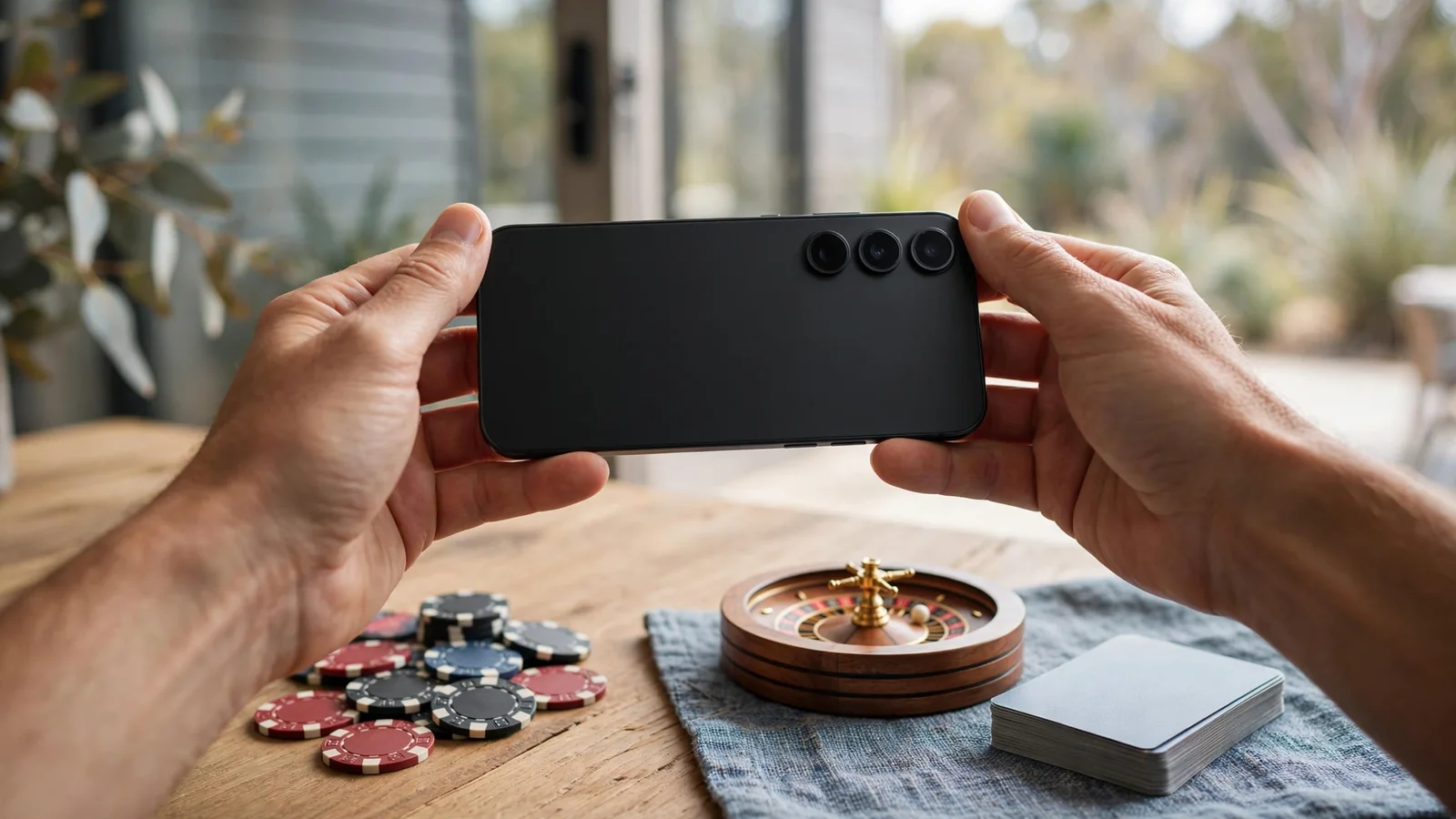
The Interactive Gambling Act 2001 makes it unlawful for operators to provide online pokies to people in Australia. The prohibition covers real-money online casino-style games, including slots, poker and table games. In other words, a site offering online slots with high volatility to Australians is not operating under an Australian online-casino licence. There is no local licensing system for these online pokie sites; those that operate are based offshore and rely on foreign licences. That does not make their services legal to offer here.
The distinction between operator and player is important. The Act prohibits the operator’s offer of the service, but players are not penalised simply for using an offshore pokie site. That is not the same as saying the service is approved, regulated locally or protected by Australian consumer safeguards. I used to treat an available site as if availability itself were a sign of legitimacy. It isn’t. A website loading on your screen is not a legal endorsement.
What ACMA does
The Australian Communications and Media Authority, or ACMA, is the federal regulator responsible for enforcing the Interactive Gambling Act and monitoring compliance with federal interactive-gambling rules. It can investigate prohibited services and take enforcement action. One of the tools available is asking Australian internet service providers to block access to websites that provide prohibited interactive-gambling services or advertise them in Australia.
Blocking is not just theoretical. ACMA reports that it has blocked more than 1,455 illegal gambling and affiliate websites since November 2019, following enforcement action. That total includes gambling sites and affiliate websites, rather than only pokie operators. A blocked address may stop loading through an Australian internet connection, but a block is an enforcement measure, not a consumer rating or a full account of every service that may be accessible.
ACMA Enforcement
ACMA can investigate prohibited services and request Australian internet service providers to block access to illegal gambling and affiliate websites.
There are also different published totals for illegal services that have left the Australian market since ACMA began enforcing the rules in 2017. One account puts the number above 210; another reports more than 190. The clear point is that enforcement has led services to withdraw, while ACMA continues to monitor the market and act against prohibited offers.
For someone searching for high-volatility online pokies, that legal context can get buried under game descriptions and promotional claims. The volatility label describes a game’s payout pattern; it does not tell you whether the operator can lawfully offer the game in Australia. Nor does it tell you what legal protections apply if a dispute arises. Those are separate questions, and mixing them up can make a risky choice look safer than it is.
I would also separate an offshore licence from permission to serve Australian customers. A foreign licence is not an Australian licence, and it does not change the Act’s position on offering online casino games to people here. The fact that a site accepts Australian visitors, lists Australian dollars or displays familiar games does not alter that. It may be accessible for a time and still be part of a market ACMA is empowered to restrict.
That is the awkward reality behind searches for high-volatility pokies in Australia: the games may be described as if they were ordinary local entertainment, but real-money online casino services are prohibited for operators under Australian law. ACMA can pursue enforcement and request website blocking, while players themselves do not face a penalty under the Act just for playing. I wish I’d understood that distinction sooner. It doesn’t make an offshore site trustworthy; it simply describes who the law targets.

So if a site disappears, or an address no longer opens, that can reflect enforcement rather than a change in the game itself. And if another site remains reachable, that should not be mistaken for approval. For me, that is the useful legal takeaway: access, a foreign licence and a game’s volatility are three different things. None turns an online pokie into a locally licensed service.
Is High Volatility Good for You—or Just a Rough Ride?
“Big win potential” sounds appealing until you ask what the game feels like when that win does not arrive. High-volatility pokies can produce rare large wins; lower-volatility ones tend to return smaller wins more often. Neither style is automatically better. The useful question is whether you can enjoy the game without needing it to behave a certain way.
I used to treat a dramatic top prize as a reason to keep going. That was backwards. A possible large payout does not make a session more likely to go well, and it does not make the quiet stretches easier to sit through. If every spin feels like a test of whether the big moment is finally coming, high volatility may turn playing into a tense wait rather than entertainment.
Lower volatility can suit someone who likes seeing smaller wins arrive more often. Those wins may be modest, but the rhythm can feel less stark. You might prefer that steadier feedback, especially if a long run without a satisfying result would spoil the session. That is a preference, not a promise that the game will keep paying or that you will finish ahead.
- Choose a style that fits your mood
- Enjoy the game without needing it to behave a certain way
- Accept that a session might not deliver a standout win
- Treat a top prize as a reason to keep going
- Let a losing run tempt you to increase your stake
- Rely on a win to change how your day feels
High volatility may appeal if you can accept that a session might not deliver a standout win at all. The rare large payout is part of the attraction, but it is only one possible outcome, not the expected ending of your particular session. I had to stop confusing “could happen” with “should happen.” A hard lesson.
So, is high volatility good in pokies? It can be a fit if you enjoy uncertainty and can leave the game without feeling owed a result. It is a poor fit if you need frequent rewards to stay relaxed, or if a losing run makes you want to increase your stake or keep playing past your planned stop. That reaction is not a character flaw; it is useful information about whether this style works for you.
It also helps to notice what you actually enjoy. Is it the possibility of a rare, substantial payout, even when it may not appear? Or do you prefer the more regular, smaller wins associated with lower-volatility games? There is no virtue in picking the more dramatic option. A quieter game can be the more enjoyable one if it lets you play without constantly waiting for a rescue.
I have learned not to judge a style by its most exciting outcome. A big payout can make a rough session look worthwhile in hindsight, but it does not erase the uncertainty that came before it or guarantee a repeat next time. Likewise, a run of small wins does not turn a lower-volatility game into a reliable way to make money. Both styles remain gambling.
Try to be honest about your mood before you start. If you are already frustrated, hoping to recover losses, or relying on a win to change how the day feels, a high-volatility game is unlikely to be a gentle choice. I would rather step away than ask a pokie to fix a bad mood. It cannot.
Set a budget before playing and never wager more than you can afford to lose. Choose the style you can enjoy within that limit, and stop when the entertainment has stopped being entertaining. If the only part you like is imagining the largest possible payout, that may be a sign to skip the game, not to chase it.
RTP Won’t Tell You What Happens Tonight
I used to treat RTP like a forecast: find a higher figure, assume the session would feel kinder. That is not what it tells you. RTP is a long-run average built into a game’s design, not a promise about what comes back during your session. A high figure cannot tell you when a win will land, how large it will be, or whether you will see a bonus.
Volatility describes a different part of the picture. It gives a broad sense of the payout pattern: high-volatility pokies can have less frequent returns, with larger wins possible when they arrive. RTP does not cancel that pattern. A game can have a comparatively high RTP and still make you wait through a rough run; a lower figure does not reveal exactly how tonight will go either.
That is the part I had to stop arguing with. “High RTP” sounds reassuring, but it is not a session-level safety net. You can’t use it to work out whether a particular run will recover, or how long you need to play before the average becomes visible. The average is not a schedule. Not tonight.
The distinction matters when a pokie has several bonus stages. Games built around multiple stages can pay out less frequently because low RTP and high volatility shape the experience together. A feature-heavy screen may look like a sequence of chances, but that presentation does not make the feature arrive on demand. Nor does RTP tell you whether a bonus will cover what you spent getting there.
When people talk about high-volatility pokies with high RTP, they are joining two separate descriptions, not identifying a special class that guarantees both frequent returns and large wins. The RTP speaks to the theoretical return over long play; volatility speaks to how unevenly results may be distributed. Neither one predicts an individual session.
So I read RTP as context, not a promise. It can help describe a game’s long-term design, while volatility hints at the ride along the way. If I start treating either as a reason to expect money back soon, I’m back to making the same mistake: turning a statistic into a prediction it was never able to make.

Low or High Volatility: Choose the Ride You Can Afford
When I’m choosing a pokie, I try to decide what kind of session I can actually live with—not which game sounds more exciting in its description. Low and high volatility offer different patterns, and neither one is automatically the better choice.
Low-volatility games tend to return smaller wins more often. That can make a session feel less stop-start, though frequent wins do not mean you’ll finish ahead. High-volatility games are the other end of the trade-off: significant wins can be larger, but they are less frequent. A small balance can disappear before a feature or a sizeable payout arrives. That’s not a technicality. It changes how long your money may last.
I used to hear “big potential” and treat it as a reason to try a higher-volatility game. What I didn’t account for was how quickly repeated losing spins could eat into the amount I’d set aside. The advertised upside was easy to picture; the cost of waiting was easier to ignore. Bad arithmetic, even if the game itself is working as designed.
So, is high or low volatility better for slots? It depends on what you want from a session and what you can afford to lose. If smaller, more frequent wins suit your pace, lower volatility may be a more comfortable fit. If you’re willing to accept less frequent wins in exchange for the possibility of a larger one, high volatility may appeal—but only if your budget can handle that uncertainty. Neither option makes a session predictable.
I now set a budget before I start, and I don’t increase it because a game feels close to paying. I also keep the stake modest enough that a run of losses won’t wipe out the money I meant to use for the session. High-volatility games especially call for disciplined stakes; betting too aggressively can drain a bankroll quickly. The point isn’t to stretch a session at any cost. It’s to avoid turning a choice about entertainment into a money problem.
A simple test helps: if the likely losing stretches would make you anxious or tempt you to spend more, choose a calmer style—or don’t play that session. If you’d be relying on a rare large win to make the experience worthwhile, the risk is probably doing more of the choosing than you are.
Choose Your Ride
- Set a budget before starting
- Determine if you prefer frequent small wins or rare large ones
- Ensure your budget can handle potential dry spells
- Keep stakes modest enough to avoid draining your bankroll quickly
- Decide to stop immediately once your limit is reached
Set a budget, stick to it, and never wager more than you can afford to lose. That matters more than picking a volatility label.
Keep Your Stakes Small Enough to Stay in the Game
I’ve learned the hard way that a stake that feels modest on a calmer pokie can chew through a balance quickly on a high-volatility game. The point isn’t to find a magic stake that makes the game safer. It’s to choose one that lets you keep playing without each run of losses forcing an immediate decision to reload or raise your bet.
Before you start, set a budget you can afford to lose. Treat it as the full cost of the session, not a target you have to use up. Then choose a steady stake that fits within it, and don’t increase it just because the last few spins went nowhere. That’s the moment I used to tell myself I was “due”; really, I was making the same bankroll disappear faster.
Smaller, disciplined stakes can slow that drain, but they don’t change how the game works or guarantee that your balance will last. A small balance can still run out before a feature appears. That’s part of the risk, not a reason to chase it with a bigger bet.
I also find it easier to stick to a plan when I decide in advance what I’ll do if I reach my limit: stop. No topping up to recover a loss, and no raising the stake to make a short session feel more worthwhile. If keeping the stake steady stops feeling possible, that’s a good cue to step away.
There’s no shame in choosing a stake that looks unexciting. With pokies built around infrequent payouts, restraint matters more than trying to force action. Keep the money separate from bills and essentials, and never wager more than you can afford to lose. Small stakes don’t remove the risk. They give you more room to manage it.
Bonus Stages and Jackpots: More Waiting, Not a Guarantee
A bonus with several stages can look like a little game inside the game. The catch is that getting through those stages is not the same as getting paid. Pokies with multiple bonus stages tend to pay out less often, with low RTP and high volatility both part of that pattern. You can reach a feature and still leave it without a profit. Flashy, not reliable.
Progressive jackpots have a different draw: the prize grows as a share of each wager is added to it. That growing total can make the game feel like it is always building toward someone’s moment. But progressive pokies generally sit on the high-volatility end, and their payouts are less frequent. The jackpot’s size does not tell you when it will land, or whether it will land during your session.
I have made the mistake of treating a bonus feature as if it were a second chance to get my money back. It isn’t. A round can show large payouts on screen and still return less than you put in. Buying access to a bonus does not change that into dependable value, and bonus buys cannot guarantee long-term profit.
Attention: Reaching a bonus feature does not guarantee a profit, and buying access to a bonus cannot guarantee long-term profit.
If you play, set a budget before you start and never wager more than you can afford to lose. A feature that takes time to trigger can drain a small balance first; the possibility of a jackpot does not protect it. I’d rather decide what I’m willing to spend while I’m calm than keep adding money because a bonus feels close.
“Big progressive” sounds like a promise. It is only a prize that may be won, attached to a game that can go a long time without paying it. Keep those two things separate. A bonus round can be exciting and still be a losing round. That’s the part the celebratory graphics leave out.
Pragmatic Slots: What Volatility Can’t Tell You
When you look for high-volatility pokies from Pragmatic Play, the provider name can feel like a useful shortcut. I’ve fallen for that sort of label before: it sounds like it tells you what the session will be like. It doesn’t. A provider makes different games, and its name alone can’t tell you what a particular run of spins will bring.
Even a volatility description is not a forecast. It cannot tell you whether a feature will appear during your session, when a payout might land, or how much you will finish with. A game’s past results don’t give you a way to read the next spin, either.
Each spin is generated independently, using an RNG to produce a random result. The last spin doesn’t set up the next one, and neither a player nor a provider can predict or manipulate the outcome. I used to watch a game after a dry patch as if it owed me a turnaround. It didn’t. That’s a costly illusion.
So treat provider branding as identification, not a promise of a particular experience. If a description uses words like “extreme” or “massive”, I read them as promotional language, not as a dependable guide to tonight’s results. The only honest expectation is uncertainty.
That uncertainty matters when real money is involved. Decide on a budget before you play, and never wager more than you can afford to lose. Don’t raise your stake because a game seems overdue to pay, or because its provider is familiar. If the money you set aside is gone, stop; changing games or waiting for a feature cannot make the next result more predictable.
No magic label. No reliable signal.
No System Can Beat a Pokie
I used to think a run of losses had to be setting up a win. It felt logical: surely the machine had to turn around. That feeling is tempting, but it doesn’t tell you anything about the next spin.
A pokie’s random number generator produces each result independently. The previous spin doesn’t make a win more or less likely on the next one, and there’s no pattern you can use to predict or control the outcome. A string of losses isn’t a signal. Neither is a recent win. It’s just what has happened so far.
That’s true whether you’re playing a high-volatility pokie or one with a different payout pattern. Volatility describes the general shape of payouts; it isn’t a system for timing a win. Pressing spin at a particular moment, changing your stake after a loss, or sticking with a machine because it “owes you” won’t influence its random result.
No trick. No due payout.
I’ve made the mistake of treating a hunch like a strategy, especially after losing more than I planned. It can make you keep playing to recover money the machine has no way of recognising as yours. The next result won’t compensate you for the last one.
So set a budget before you start, and never wager more than you can afford to lose. If you reach that limit, stop rather than raising your stakes or chasing what’s gone. A budget can’t change the result; it can keep one session from turning into a bigger financial problem.
There’s no dependable system that beats a pokie. If you play, treat every spin as uncertain, not as a step towards a result you’re owed.
Prepared by the SpinBetter Casino editorial staff.