
Best Pokies in South Australia: What to Know
 Available in AU
Understand what game randomness means, what venue and payment searches can’t confirm, and why online rules matter when comparing South Australian pokies.
Table of Contents
- What “Best” Can—and Cannot—Mean for South Australian Pokies
- When a Venue Is Open, Who Is on Duty?
- Pokies Near the Airport: Check the Trip, Not Just the Map
- Online Pokies and Deposits: Know the Legal Limits First
- South Australian Pokies Venues: What the Search Results Don’t Confirm
- “24-Hour” Play Still Needs a Personal Stop Time
- Searching for Crown in South Australia? Check the Location Carefully
- CBD Clubs and Pokies: Don’t Mistake a Search for a Venue Record
- Cashless Deposits and PayID: A Payment Method, Not a Safety Stamp
- South Australian Pokies: Who Enforces the Online Rules?
What “Best” Can—and Cannot—Mean for South Australian Pokies
“Best” sounds like a clean verdict: find the pokie that pays most, sit down, and let the machine do the rest. I used to read claims like that as if somebody had checked the outcome in advance. They hadn’t. A game can be compared on its published features, but no label can tell you what your next spin will do or turn a game into a reliable way to win.
The key detail is that every spin is a separate random event, determined by a Random Number Generator. A win on one spin does not make a win more likely on the next, and a run of losses does not mean the machine is “due”. I’ve caught myself treating a streak as a clue. It wasn’t one. It was just a streak, and my confidence in it didn’t change the odds.
That independence is easy to forget because pokies are designed to keep each result visually connected to the last: symbols line up, sounds build, and a near miss can feel like a hint. But the feeling of a pattern is not evidence that the next result has been set up to complete it. Every spin starts on its own. There’s no useful system hidden in watching a machine’s recent history.
If you’re looking for pokies options connected with South Australia in 2026, use this list to check the specific details available for each operator. Consider those details as a starting point when deciding what to investigate further.
License: Curacao Gaming Control Board OGL/2023/176/0095 (Hollycorn N.V.) LuckyVibe lists a Curacao Gaming Control Board licence, OGL/2023/176/0095, held by Hollycorn N.V.
License: Curacao Gaming Control Board OGL/2023/176/0095 (Hollycorn N.V.) Neospin lists a Curacao Gaming Control Board licence, OGL/2023/176/0095, held by Hollycorn N.V.
License: Curacao eGaming OGL/2023/174/0082 (Dama N.V.) · Min. deposit: A$15 LevelUp Casino lists a Curacao eGaming licence, OGL/2023/174/0082, held by Dama N.V. Its minimum deposit is A$15.
License: international iGaming licence – jurisdiction not named in the source · Payout speed: PayID 1-24 hours · Min. deposit: A$30 (PayID from A$10) House of Pokies lists an international iGaming licence, though the jurisdiction is not named. PayID payouts are stated as taking 1–24 hours; the minimum deposit is A$30, or A$10 with PayID.
License: Curacao Gaming Control Board OGL/2023/174/0082 (Dama N.V.) SpinsUp lists a Curacao Gaming Control Board licence, OGL/2023/174/0082, held by Dama N.V.
License: Curacao eGaming (Roby Games Ltd) Roby Casino lists a Curacao eGaming licence held by Roby Games Ltd.
License: Curacao · Min. deposit: A$20 (POLi) Lucky Dreams lists a Curacao licence. Its minimum deposit is A$20 when using POLi.
Payout speed: crypto under 1 hour, PayID 1-3 business days · Min. deposit: A$20 (A$30 to qualify for the bonus) Ricky Casino states that crypto payouts take under an hour and PayID payouts take 1–3 business days. The minimum deposit is A$20, or A$30 to qualify for the bonus.
License: Curacao Gaming Authority (Jumpman Gaming Ltd) DragonSlots Casino lists a Curacao Gaming Authority licence held by Jumpman Gaming Ltd.
Payout speed: crypto 30-120 minutes, fiat 24-72 hours · Min. deposit: A$30 MrPacho states that crypto payouts take 30–120 minutes and fiat payouts take 24–72 hours. Its minimum deposit is A$30.
Return to player, or RTP, is another term that can sound more certain than it is. It describes a game’s theoretical return over a very large number of plays, not what one person should expect over a short session. It is not a promise that you’ll get a particular share of your spend back, and it does not predict when a win will land. A published figure can help describe a game’s setup; it cannot tell you how your own play will go.
There is another wrinkle: the same pokie may not have the same RTP setting everywhere. A specialist review reports that some game providers let casinos choose between multiple RTP configurations for a game. That means recognising a title is not enough to know which setting is in use. If RTP matters to you, look for information tied to the specific version and the casino offering it, rather than assuming the name alone settles the question.
Even then, a higher published RTP would not make a particular spin more likely to pay, nor would it guarantee a better result over the time you play. It is one comparison point, not a forecast. I’ve learned to distrust any sentence that turns a theoretical figure into a personal prediction. That leap is where “best paying” can quietly become “you should win”.
A fair comparison starts with the things you can actually establish: whether the game’s stated rules are clear, what its paytable says, and whether the RTP information applies to the version in front of you. Those details can help you understand the game. They do not prove that one title is best for every player, or that a game will pay well during your session.
The phrase “best pokies in South Australia” can also blur two separate questions: which game has features you prefer, and what outcome you might get. The first is a matter of taste. You may like a simple layout, a particular pace, or rules you can follow without constantly checking the screen. The second is uncertain by design. A game that suits you is not necessarily a game that pays more, and a favourable theoretical return does not remove the possibility of losing.
I wouldn’t turn a list of popular titles into a ranking of winners. Popularity tells you that people play a game; it doesn’t establish that it pays better. A glowing description, a dramatic jackpot animation or a “hot” label is also not evidence that the next result is more likely to favour you. Marketing talks in confident shortcuts. The machine does not.
So when you’re weighing South Australian pokies, keep “best” modest. It can mean a game whose rules you understand and whose published information you can check. It cannot mean a dependable route to profit, a prediction about your next spin, or proof that one machine is secretly ready to pay. I’d rather know what I’m choosing than pretend I can know what it will do.
Attention: A theoretical RTP figure is a comparison point, not a forecast, and cannot be used as a personal prediction for your own play.
That distinction matters whether you’re thinking about a casino pokie or comparing a game you have encountered elsewhere. A title’s name, theme and recent results don’t settle its setting or its future results. And if you can’t confirm which RTP version is being offered, don’t fill the gap with the assumption that it must be the most favourable one.
No magic pick.
When a Venue Is Open, Who Is on Duty?
A venue’s opening hours answer one narrow question: whether its doors are open. They don’t tell you who is responsible for responding if someone appears distressed, loses track of their spending or needs help stepping away from the pokies. I used to treat “open” as if it meant the whole place was ready and properly staffed for anything. It doesn’t.
There’s a specific distinction between general venue staff and a responsible gambling officer, or RGO. A report published by regionriverina.com.au describes a requirement for venues with more than 20 gaming machines to have a dedicated RGO on duty while those machines are operating, with the change applying from 1 July. The report also describes a one-month grace period for venues to remove signage and introduce the officers. Those details are a reported requirement, not something an opening-hours listing can confirm about a particular South Australian venue.
That distinction matters if you’re trying to understand what “open now” really means. A venue may be operating, but the hours alone won’t tell you whether a dedicated officer is on duty, whether the machines are operating, or what arrangements apply to that venue. Don’t read a listing as proof of oversight. It’s just a listing.
What the officer’s role signals
The value of a responsible gambling officer isn’t that the title guarantees a particular outcome. It signals that someone has a designated role connected with gambling-related concerns while the machines are operating. If you’re worried about your own play, or you notice someone struggling, having a named point of responsibility is more useful than assuming any staff member will automatically know what to do.
I’ve had moments when I wanted to leave but kept telling myself I’d make the decision after one more spin. In that state, “the venue is open” wasn’t helpful information. What mattered was whether I could speak to someone without having to turn it into a big public scene. A dedicated officer can give you a clearer person to approach; it doesn’t make the decision for you, and it can’t undo money already spent.
The reported change also links machine operation to the officer being on duty. That is different from a venue’s general opening time. A venue can be open for other reasons, and a posted schedule may not describe the status of every part of its operation. If your question is specifically about support on the gaming floor, ask directly rather than guessing from the time on a directory page.
Why an incident register matters
The same report describes a requirement for venues to keep a gambling incident register. It is intended to record occurrences that may indicate a patron is at risk of, or affected by, gambling harm. The point is not to label a person or assume that one awkward moment proves anything. It is to make relevant incidents recordable rather than leaving every concern as an informal conversation that may be forgotten once a shift changes.
A gambling incident register is used to record occurrences that may indicate a patron is at risk of, or affected by, gambling harm.
That matters because a single interaction can be easy to dismiss. A person may say they are fine, or staff may see only part of what has happened. Recording an incident creates a venue record of the concern and gives staff a way to document what prompted it. It doesn’t tell you what action was taken, and it isn’t a public log that lets a visitor inspect other people’s private circumstances.
If you speak to staff about a concern, you can ask who is responsible for gambling-related support and what help is available. You don’t have to make a formal accusation or prove that someone is harmed before asking for assistance. I learned that the hard way: waiting until I felt completely certain gave me another excuse to say nothing.
There are also rules about gambling-related signage. A sign directing patrons to gaming lounges should be removed if it is within eyeshot of an ATM or EFTPOS terminal; signs directing patrons to ATMs should be removed if they are within eyesight of gaming machines. Those are separate from staff duties, but they reflect the same practical idea: information around play can affect a person’s next decision. If a sign seems to be pointing you straight from a machine to cash, don’t treat it as neutral guidance.
Opening information still has its place, but it cannot answer every question about supervision. Nor does a search result establish that an RGO is present or explain how a concern will be handled. If support is the reason you’re asking whether a venue is open, contact the venue and ask about its current arrangements. Hours are only hours.
Pokies Near the Airport: Check the Trip, Not Just the Map
A map pin can make a venue look like a quick stop between a flight and the rest of your day. I’ve learned not to treat that little marker as a plan. It may show a broad area, an old address or a place that is less straightforward to reach than the map first suggests. Before setting off for pokies near an airport in South Australia, confirm the destination itself—not just the label on the screen.
Start with the venue’s own current information. Check that its address matches the map pin, then look for an update to its opening information. If anything is unclear, contact the venue directly before travelling. A listing can stay visible after details change; seeing it in a map or search result doesn’t confirm that it is open when you arrive.
That small check can spare you a frustrating detour. Pins aren’t promises.
Think about the whole journey, too. Airport travel can involve a terminal, a pickup point, a car park, or a change of transport; “near the airport” doesn’t tell you which route you’ll actually need. Compare the venue address with your starting point and check the route at the time you plan to go. If you’re relying on someone else for a lift, make sure they have the same destination details. A pin dropped in the wrong place is still wrong when it’s shared.
- Confirm the destination address
- Check current opening hours
- Plan your full route
- Trust a map pin alone
- Assume “near” means easy access
- Rely on outdated search results
I’d also separate distance from convenience. A venue may look close on a map but still require a route that doesn’t fit your plans. Check how you’ll get there and how you’ll leave, rather than making the decision from a zoomed-out view. If your flight timing changes, revisit the venue’s information instead of assuming an earlier check still applies.
The same caution works for searches around a CBD, a central area, or somewhere described as north of a city. Those words can cover a broad patch, and a result that seems nearby may not be convenient from your actual location. For “pokies near me,” make sure the device is showing the right area and that the result’s address is clear. Don’t travel on the strength of a vague label.
I wouldn’t assume that a venue is inside an airport, beside a terminal, or within an easy walk just because the words appear together online. Treat “near” as a starting point for checking, not a measured promise. If you can’t confirm the address and current opening information, wait until you can. The trip is easier to judge when you know where you’re going.
There’s no clever trick here; it’s the same dull check I wish I’d made before trusting a convenient-looking result. Confirm the venue, confirm the address, and make sure the route works for your plans. If any of those pieces are uncertain, don’t let a map pin make the decision for you.

Online Pokies and Deposits: Know the Legal Limits First
If you’re looking for real-money online pokies from South Australia, the legal position matters more than the promise attached to a game. The Interactive Gambling Act 2001 prohibits companies from providing online casino games to people in Australia unless they hold a domestic licence. No Australian online casino licences have been issued, so there is no locally licensed casino offering real-money pokies.
That rule is aimed at operators, not individual players. Australians are not committing an offence simply by playing on an offshore site that accepts them. But that does not put the site under Australian oversight or give you the protections you might expect from a local business. A familiar-looking website, a polished bonus page or claims about “best paying” games do not change that legal position.
The practical risk is sharper if there is a dispute. If an offshore casino refuses to pay winnings, Australian players have no legal recourse in Australia to make it pay. I used to treat a successful deposit as proof that the whole process would work smoothly. It isn’t. Getting money onto a site and being able to recover winnings are separate matters.
Before depositing, read the withdrawal terms as carefully as the offer. A “no deposit” bonus or a high-limit claim is still an offer from the operator, not evidence of Australian licensing or a promise that a withdrawal will be straightforward. Check whether bonuses have conditions, whether certain games are excluded, and what the operator says it can require before releasing funds. Don’t assume a headline tells the full story.
Legal Risk
There are no locally licensed online casinos in Australia; using offshore sites means you have no legal recourse in Australia if a dispute arises.
Identity checks can also arrive at cash-out time. A specialist review says some operators require verification before a first withdrawal, potentially asking for identity documents, proof of address and, in some cases, a selfie with the ID. That is a report about operator practices, not a guarantee that every site handles verification the same way. Find out what documents may be requested before you put money in, and consider whether you are comfortable sharing them with a business outside Australia.
A deposit going through does not confirm that a site is licensed, trustworthy or likely to pay. Nor does a bonus make up for the absence of local recourse. I learned to stop treating the front page as the whole deal. The terms and the withdrawal process matter more than the pitch.
If you cannot establish who operates a site, understand its conditions, or accept the risk that a payout dispute may have no Australian remedy, don’t deposit. A big offer can look persuasive on a screen. The legal protection is still absent.
South Australian Pokies Venues: What the Search Results Don’t Confirm
I’ve learned not to treat a polished listing as a venue record. A page can pair a South Australian suburb or CBD label with a few familiar promises, yet still leave basic details unclear: whether the business is operating under that name, whether the address is current, and what facilities are actually available there. A map pin is a starting point, not proof.
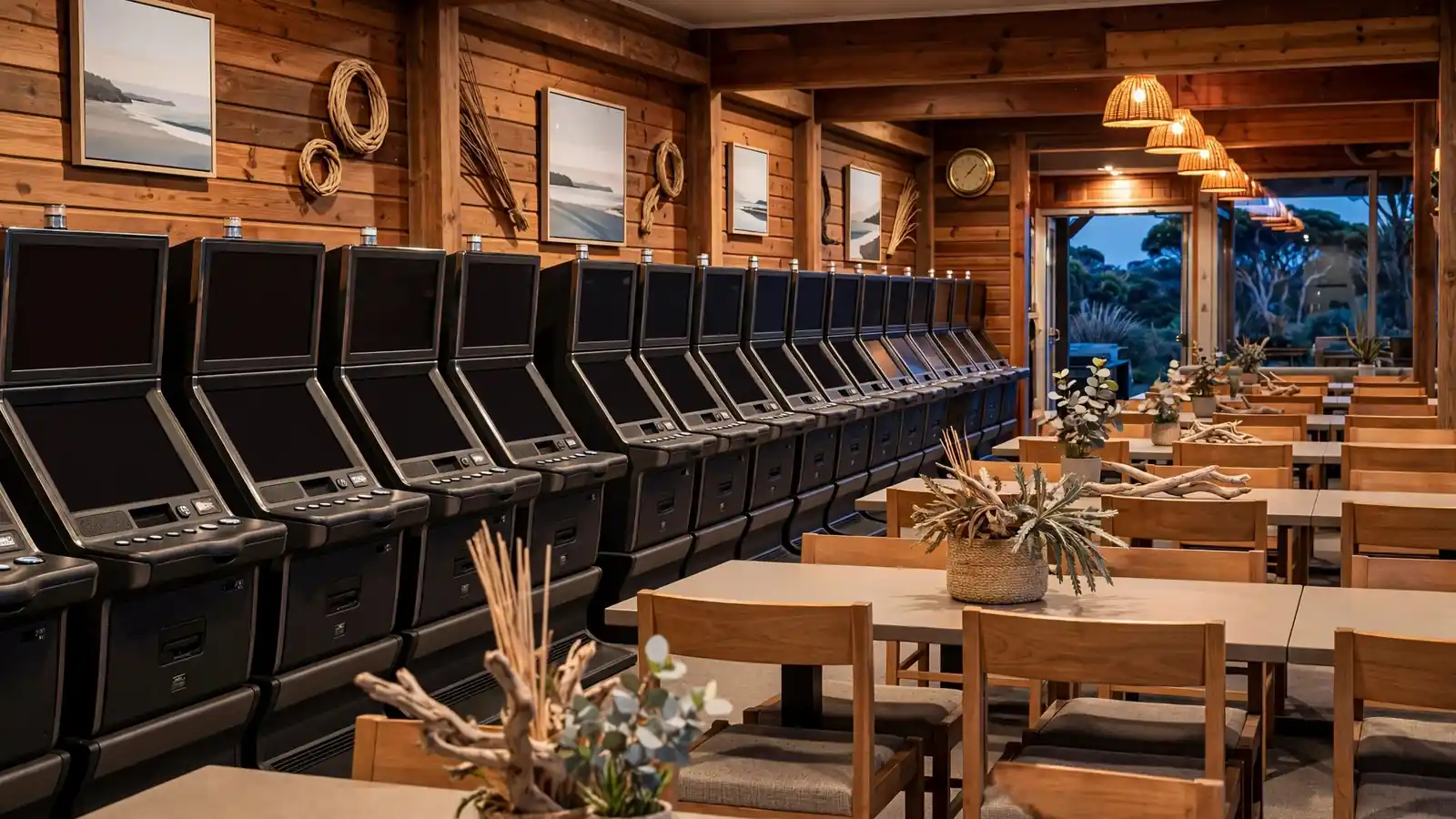
That matters when you’re comparing pokies venues across South Australia or trying to find one in the CBD. Search results can mix venue pages, directories, old reviews and promotional copy. They may look equally definite, but they do not all carry the same weight. A ranking marked “best” can reflect how a page is written or presented rather than a checked comparison of the venues themselves.
I used to read those labels as if somebody had done the legwork for me. That was an easy way to end up with more confidence than information. “Top-rated” sounds useful; without knowing what was rated, by whom, and when, it tells you little.
Before making a trip, check the venue’s own current information and compare it with a reliable map listing. Look for a matching name and address, then confirm that the page describes the physical venue rather than an online service or a general directory entry. If the details disagree, contact the venue directly before setting out. That small check beats relying on a page that may have been copied, moved or left untouched.
Be just as careful with claims about what you’ll find inside. A listing that mentions dining, entertainment or pokies does not necessarily establish which facilities are available now, or whether the information applies to that exact location. If a particular feature matters to your plans, ask the venue rather than filling in the gaps yourself.
For CBD locations, a central-city label can make a result seem more precise than it is. Check the street address, not just the suburb or map area, and make sure the venue name is consistent across the details you use. If you’re comparing several places, write down what each venue confirms directly and leave promotional rankings out of the comparison. No magic shortlist.
Venue Verification
- Match the venue name and address across reliable sources
- Contact the venue directly to confirm current facilities
- Distrust promotional rankings like “best” or “top-rated”
- Verify physical addresses for CBD locations
The same standard applies to claims that one South Australian venue is the best. “Best” might mean convenient, familiar or popular with reviewers; it is not a dependable measure of what your visit will be like. I’d rather have one current address and a clear answer about the facilities than a confident badge and a stack of vague praise.
A little scepticism is not cynicism. It is simply a way to avoid planning around details a listing never actually established. Search results help you find possible places; the venue’s current information is what helps you decide whether the trip makes sense.
“24-Hour” Play Still Needs a Personal Stop Time
A venue’s posted hours tell you when you may be able to play; they don’t tell you when you should stop. I’ve made the mistake of treating “open” as a reason to keep going. It isn’t. If you’re looking for pokies late at night in South Australia, make your own plan before you arrive rather than letting the clock, a win or a losing run make it for you.
Set a deposit limit that fits what you can afford to lose, and decide on a loss limit and a session time limit as well. These are standard responsible-gambling tools, but a limit only helps if you respect it. Don’t raise it in the moment because you feel close to a win or want to recover what has gone. When your stop point arrives, leave. No clever exception.
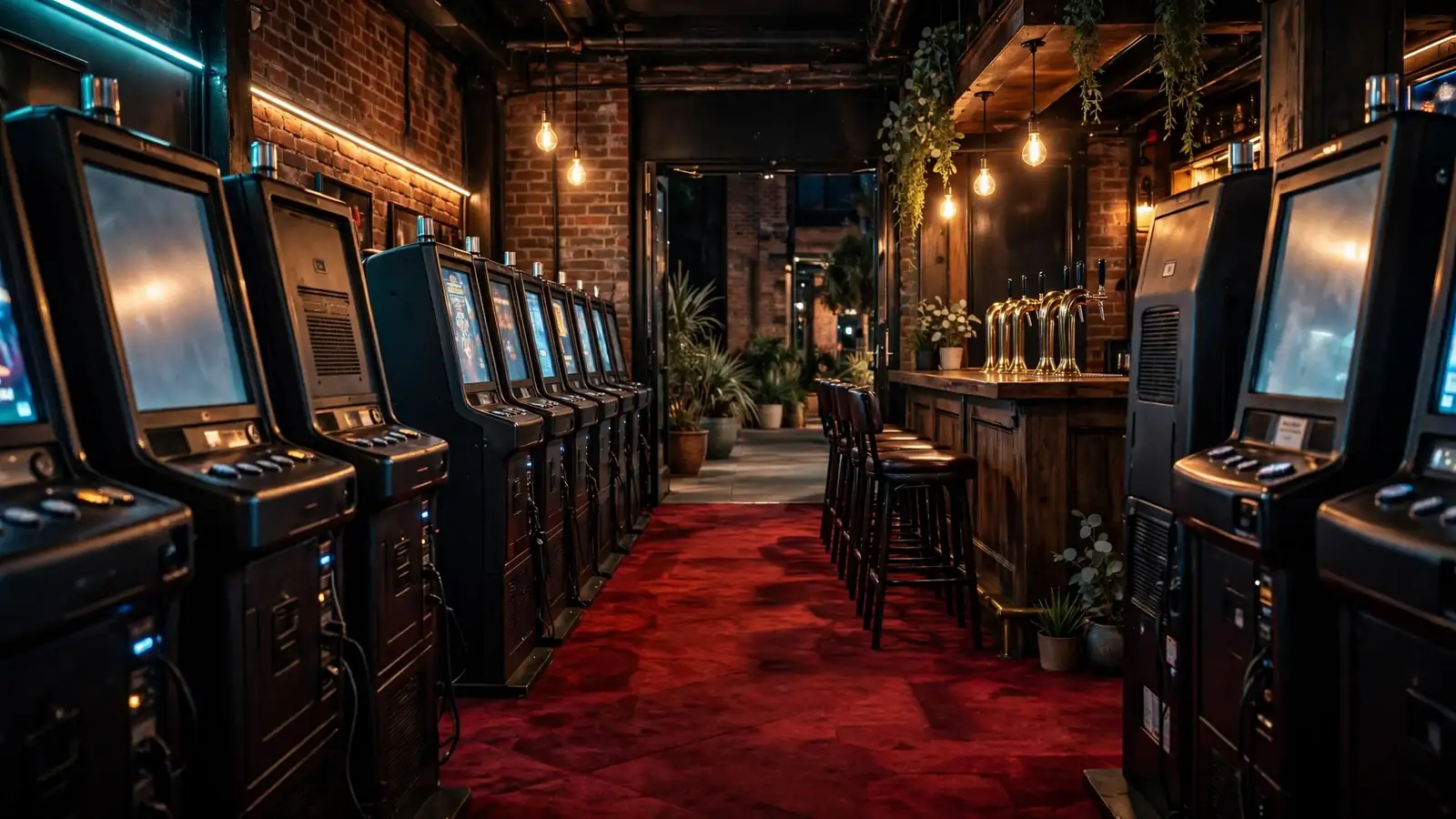
I find it useful to make the decision while I’m still clear-headed: how much I’m willing to spend, how long I’ll stay, and what I’ll do when either limit is reached. That last part matters. If “I’ll just see how I feel” is the whole plan, it’s easy to keep playing.
If you’re using an online service, don’t assume the same tools make the service safe or legally available. Real-money online casino games, including pokies, are prohibited for operators serving people in Australia, and there is no Australian-licensed online casino. BetStop is not a universal backstop: it applies to Australian-licensed operators and does not bind offshore sites. That distinction matters.
The minimum legal age for gambling in Australia, including online pokies, is 18. If you’re under 18, don’t gamble; if you’re an adult, check your own limits before you start, not after a long session has already blurred your judgement.
A stop time can feel arbitrary when the play is absorbing. That’s the point: you choose it before the game has a chance to talk you out of it. If you find you’re repeatedly breaking your limits, pause rather than trying to solve the problem with a bigger one. A night that ends on time is a better outcome than one that runs on because the venue remains open.
Searching for Crown in South Australia? Check the Location Carefully
A Crown name in a result, map label or discussion is not enough to establish that a Crown venue is in South Australia. It may refer to a place elsewhere, an old listing, or wording that has been attached to a page without making its location clear. I’ve learned not to let a familiar name do the checking for me.
Attention: A familiar name in search results does not prove a venue is located in South Australia or that it offers specific pokies.
Before making plans around a Crown-related result, confirm the venue’s exact address and state using current information from the venue itself. Check that the page is about a physical place, not a general brand page or a listing that has been copied elsewhere. If the location is absent, vague or inconsistent across pages, pause rather than filling in the gaps yourself.
That matters when you are looking for pokies at a particular place. A name alone does not confirm that the venue has pokies, what is available there, or whether any particular room is the “best”. Those are separate claims, and search wording is not proof of them. No shortcut there.
The same goes for a question about the maximum cash payout on pokies. Don’t assume there is one figure that applies to every game or venue, and don’t treat a broad page title as a payout rule. If payout conditions matter to your decision, look for clear, venue- and game-specific terms. If you cannot find them, you do not have enough information to rely on a number.
I used to read a confident listing as if somebody had checked every detail. That was a bad habit. A neat map pin and a well-known name can make a result feel settled when it has only matched the words you typed.
So separate the checks: where the place is, whether it is actually the venue you mean, and what its current information says about pokies and payouts. If those details do not line up, don’t travel on an assumption. A Crown-related result is a reason to verify the location, not a recommendation or proof of a South Australian venue.
CBD Clubs and Pokies: Don’t Mistake a Search for a Venue Record
A result for a club in a city-centre area can look like a neat answer: a name, a map pin and a few photos. It is not proof that the club has pokies, or that the machines shown in an old image are still there. Search terms can bring together clubs, events, accommodation and gaming-related pages without explaining which details belong to which place.
I used to treat a confident-looking listing as if someone had checked it for me. That was lazy. Before making a trip, go to the club’s own current information or contact the venue directly and ask whether it has pokies. If the listing is unclear, do not fill the gap with assumptions based on its name, category or photos.
The same goes for “best” claims attached to CBD clubs. A label like “popular” tells you neither what machines are available nor whether a particular venue suits you. A map result also cannot tell you what the experience will be like once you arrive. There is no shortcut from a search result to a reliable comparison.
Keep the venue check separate from the decision to play. If you do choose to gamble, set a limit before you start and stop when you reach it; a venue’s advertising is not a plan for your spending. Pokies are gambling, not a way to make money. That’s the blunt bit.
If you are trying to avoid pokies, self-exclusion is one of the responsible-gambling tools available. It is worth checking what exclusion options apply to the setting you intend to avoid, rather than assuming that one step covers every venue or service. BetStop applies to Australian-licensed operators; it does not bind offshore sites. That distinction matters if your concern includes online gambling as well as visiting a club.
Self-exclusion tools vary by venue; note that BetStop applies to Australian-licensed operators but does not bind offshore sites.
You must be at least 18 to gamble in Australia. If you are under that age, do not enter a gambling area or try to play.
A CBD label tells you where a listing claims to be, not what the club offers. A club name does not confirm that pokies are present. Check with the venue, decide your boundary in advance, and be willing to leave the question unanswered if the information cannot be confirmed. No guesswork needed.
Cashless Deposits and PayID: A Payment Method, Not a Safety Stamp
When people talk about cashless pokies, they can mean different things: a card or bank transfer instead of cash at a venue, or an online payment method. PayID belongs to the second conversation. It is not a pokie feature; it is a way to address a bank transfer using an email address, mobile number or ABN rather than entering account details.

The transfer runs through Australia’s New Payments Platform (NPP), the infrastructure PayID sits on. Major Australian banks support the NPP, and its transfers use end-to-end encryption. That describes how the payment network handles a transfer. It does not tell you what a gambling site does with your money after receiving it.
I used to treat a familiar payment logo as a quiet endorsement. It isn’t. PayID working on a site proves neither that the site is licensed nor that its games are fair, and it tells you nothing about whether the operator is transparent about a game’s return settings. Payment convenience and trustworthiness are separate questions.
If you are considering a transfer, check the recipient details shown by your bank before confirming. A payment alias is meant to make addressing a transfer simpler; it is not a reason to skip the ordinary checks on who is receiving it. And if a site presents PayID as proof that it is safe, that is marketing, not evidence.
Cashless does not mean risk-free. Keep the distinction clear.
South Australian Pokies: Who Enforces the Online Rules?
When you’re looking into pokies from South Australia, it helps to separate the place you’re sitting from the rules governing online services. The main domestic regulator for online gambling is the Australian Communications and Media Authority (ACMA). It enforces the Interactive Gambling Act 2001, which prohibits operators from providing real-money online casino games to people in Australia.
That enforcement role is not a rating system for games or a stamp of approval for a website. I used to read a site’s polished look as a sign that someone official had checked it. That was a bad shortcut. ACMA’s role is about enforcing the law, not telling you which pokies are worthwhile or promising that a particular site is fair.
One practical tool is site blocking. ACMA blocks access to illegal offshore gambling sites, and Australian internet service providers are required to follow its blocklist. A page that stops loading may therefore reflect an enforcement action, not a temporary technical fault or a judgement about the game itself. Equally, a page that remains accessible is not proof that the operator is authorised to provide online casino games to Australians.
That distinction matters if you’re trying to work out what “best” means. A search result, familiar game title or working link cannot tell you that an online pokie is locally approved. The regulator’s work is about the service and its legal status, not selecting a winning game for you.
I’d treat access as a poor safety signal. A blocked site is not somewhere to seek a workaround, and an unblocked one has not thereby earned a green light. The useful takeaway is plain: ACMA enforces the federal online rules, with blocking carried out through internet service providers. That is the enforcement picture—not a recommendation list.
Are online pokies legal for Australian players?
Yes, Australians can legally play on offshore sites that accept them, but offering real-money online pokies to Australians without a domestic licence is illegal for operators. No Australian-licensed online casino exists, and players have no legal recourse in Australia if an offshore casino withholds winnings.
What is the cost-benefit calculation of casino promotions?
Check the wagering requirement and what it applies to before accepting a promotion. For example, a $500 bonus with a 40x requirement means $20,000 in bets before withdrawing winnings; if the 35x requirement applies to a $500 deposit plus a $500 bonus, it means $35,000 in bets. Free-spin winnings may also have a cash-out cap.
Can casinos change the RTP of their games?
Yes, some game providers let casinos choose from multiple RTP settings for a game. Check the RTP information for the specific version offered by that casino; the game’s title alone does not identify its setting.
What is the legal age for online gambling in Australia?
You must be 18 or older to gamble online in Australia.
Published by the SpinBetter Casino team.