Best Pokies in Brisbane: Verify Venues Before Visiting
 Available in AU
Search listings can be outdated or ambiguous, so confirm the address, contact details and current status directly with the venue.
Table of Contents
- Before You Head Out: Check the Venue, Not the Search Snippet
- What “Best Paying” Can—and Can’t—Tell You
- Max Bets, Online Search Results and the Australian Legal Reality
- Brisbane Venues: What to Check Before You Play
- Deposits, PayID and the Risks Behind Online Searches
- Looking for Pokies Near the Airport? Verify the Location First
- Brisbane Pokies Hours: Don’t Assume They Run Around the Clock
- South Brisbane and South Bank: Check the Exact Venue
- CBD Clubs and Pokies Searches
- Searching for Crown Brisbane Pokies
Before You Head Out: Check the Venue, Not the Search Snippet
When I’m trying to find out whether a Brisbane venue is open now, I don’t treat a search result as confirmation. A listing can look current and still be out of date, or show a venue’s general details without telling you what is happening today. I’ve made the trip on the strength of a quick result before. It’s an easy way to waste an evening.
I can’t confirm that any particular Brisbane venue is open at this moment. So before setting off, check the venue’s own current information and, if the answer matters to your trip, contact it directly. That small extra step is less exciting than a confident-looking snippet. It’s also more useful.
Check that you have the right place
Start with the venue’s official website or its verified social account. Make sure the address and contact details match the place you intend to visit. Search results can put similar names close together, and a map pin is not proof that you have found the right entrance or the right business.
If the venue publishes updates, look for a recent post or notice rather than relying on a page that simply appears near the top of your screen. A page can remain visible long after its details have changed. If you cannot find a current update, call and ask whether the venue is open to visitors now.
Be specific about what you need to know. You’re checking whether you can visit, not asking a search engine to make the decision for you. If you are travelling with someone, or making a special trip, confirm the details before you leave rather than assuming that an old listing still applies.
Treat “open now” as a prompt to verify
The phrase “open now” can make a result feel definitive. It isn’t. A listing may rely on hours entered earlier, and a venue’s own page may not immediately reflect a temporary change. Even a recent-looking result can leave out a detail that affects your visit.
I’d check the venue’s own contact channel and ask plainly whether it is open to patrons at the time I plan to arrive. If there is no answer, I would not turn silence into a yes. You can try another official channel, but if the status still cannot be confirmed, you may want to postpone the trip.
That applies whether you are heading out early, late, or at a time you expect the venue to be operating. I’m not going to guess from a general listing, and I wouldn’t plan around a claim that a venue is open at a particular time unless the venue itself confirms it. A quick check beats a long detour.
Confirm what your visit involves
Opening status is only one part of the decision. Before you go, check whether the information you found actually relates to the visit you have in mind. If a page is unclear, ask the venue directly rather than assuming that every facility or activity you associate with the place is available.
Keep the confirmation practical: the venue’s location, whether it is accepting visitors, and any conditions that affect entry. If the answer you receive conflicts with an online listing, give more weight to a direct, current response from the venue. Save or note the details if you are relying on them for a journey.
I used to read a tidy listing as if someone had checked it that day. That was my mistake. A polished page can be old; a direct answer is harder to misread.
- Check the venue’s official website or verified social accounts
- Contact the venue directly to confirm current status
- Verify the exact address and entrance
- Ask specific questions about facilities
- Rely on search engine snippets for opening hours
- Assume a map pin proves the right entrance
- Treat “open now” results as definitive
- Assume old listings still apply
Decide before you set off
It helps to make the call before you are already on your way. If you are unsure, ask again closer to departure, especially when your plans depend on the venue being open. A listing can guide you to a place, but it cannot promise that the details have kept pace with real life.
Also take a moment to decide what you can afford to spend and how long you want to stay. Deposit limits, loss limits and session time limits are tools that can help you set boundaries; self-exclusion is an option if you need to step away from gambling. I’ve found it easier to make those decisions before I’m at a venue than once I’m there.
You must be at least 18 to gamble in Australia. If that does not apply to you, do not go to gamble.
The useful answer to “Are the Brisbane pokies open now?” is not a confident guess from a snippet. It is a current confirmation from the venue you actually plan to visit. If you can’t get one, don’t pretend you have.
What “Best Paying” Can—and Can’t—Tell You
If you’re looking for pokies in Brisbane in 2026, checking the details each operator makes available can help you decide what to explore. Use this list as a reference point and review the terms that matter to you.
License: Curacao Gaming Control Board OGL/2023/176/0095 (Hollycorn N.V.) LuckyVibe lists a Curaçao Gaming Control Board licence, OGL/2023/176/0095, held by Hollycorn N.V.
License: Curacao Gaming Control Board OGL/2023/176/0095 (Hollycorn N.V.) Neospin lists a Curaçao Gaming Control Board licence, OGL/2023/176/0095, held by Hollycorn N.V.
License: Curacao eGaming OGL/2023/174/0082 (Dama N.V.) · Min. deposit: A$15 LevelUp Casino lists a Curaçao eGaming licence, OGL/2023/174/0082, held by Dama N.V., and a minimum deposit of A$15.
License: international iGaming licence – jurisdiction not named in the source · Payout speed: PayID 1-24 hours · Min. deposit: A$30 (PayID from A$10) House of Pokies lists an international iGaming licence, though the source does not name its jurisdiction. PayID payouts are listed at 1–24 hours, with a minimum deposit of A$30 or A$10 via PayID.
License: Curacao Gaming Control Board OGL/2023/174/0082 (Dama N.V.) SpinsUp lists a Curaçao Gaming Control Board licence, OGL/2023/174/0082, held by Dama N.V.
License: Curacao eGaming (Roby Games Ltd) Roby Casino lists a Curaçao eGaming licence held by Roby Games Ltd.
License: Curacao · Min. deposit: A$20 (POLi) Lucky Dreams lists a Curaçao licence and a minimum deposit of A$20 via POLi.
Payout speed: crypto under 1 hour, PayID 1-3 business days · Min. deposit: A$20 (A$30 to qualify for the bonus) Ricky Casino lists crypto payouts under an hour and PayID payouts in 1–3 business days. Its minimum deposit is A$20, or A$30 to qualify for the bonus.
License: Curacao Gaming Authority (Jumpman Gaming Ltd) DragonSlots Casino lists a Curaçao Gaming Authority licence held by Jumpman Gaming Ltd.
Payout speed: crypto 30-120 minutes, fiat 24-72 hours · Min. deposit: A$30 MrPacho lists crypto payouts in 30–120 minutes and fiat payouts in 24–72 hours. Its minimum deposit is A$30.
“Best paying” sounds like a simple promise: pick the right pokie and your chances improve. I used to read that kind of claim as if it meant a machine was due to give something back. It doesn’t. A description of a game cannot tell you what your next spin will do, or what you will take away from a session.
Each spin is a separate random event, determined by a Random Number Generator. The previous result does not make a particular outcome more likely on the next spin. A run of losses is not a signal that a win is coming, and a recent win does not mean the machine has used up its luck. I’ve made both mistakes, and neither gave me an edge.
That distinction matters when you’re trying to judge which pokies might pay well in Brisbane. A game’s advertised return figure, where one is published, describes a theoretical rate across play over time; it is not a forecast for an individual player or a particular visit. Even if two people sit down at the same game, their outcomes can be completely different. The wording may sound confident. The result isn’t.
The same game may not mean the same setting
There’s another wrinkle: a game’s name alone may not tell you its return setting. A specialist review reports that some providers let casinos choose between multiple RTP settings for a given pokie. In that case, the same game might have different return percentages at different casinos.
That is a reason to be careful with broad claims about a game, not proof that any particular Brisbane machine uses one setting or another. If a listing calls a title one of the best-paying pokies, check what the claim actually refers to. Does it identify the setting? Is the information tied to the specific game offering being discussed? If not, the label may leave out the detail you’d need to compare like with like.
And even a clearly stated RTP setting would not promise a result for you. It is a theoretical measure, not a personal payout schedule. It cannot tell you whether a session will finish ahead, how long a balance will last, or whether a particular spin will win. Those are different questions.
Treat rankings as claims, not instructions
When I see “best” attached to a pokie, I try to separate the measurable detail from the sales language. A ranking may be built around a stated return setting, a reviewer’s preference, or a feature that makes the game more entertaining to that reviewer. Those are not interchangeable. “Popular” doesn’t mean more likely to pay, and a lively screen or frequent small win doesn’t establish that a game returns more over time.
The same caution applies when a page puts a Brisbane label beside a game name. The location in the wording does not, by itself, tell you which setting is used at a particular machine. Nor does a list of titles establish which games are available at a particular venue. The label and the details need to match.
Attention: A game’s advertised return figure is a theoretical rate over time, not a forecast for an individual player or a guarantee for your next spin.
I’d also be wary of treating a single player’s big win as evidence. It tells you that person had that outcome; it cannot show what another player will get, or what the game will do next. A story can be real and still be a poor guide to your own odds.
If you’re comparing games, look for a specific, clearly explained RTP setting rather than a promise that something “pays well.” Then keep the limits of that figure in view: it says nothing certain about your next spin. If the setting is not identified, the game title alone is not enough to make a meaningful return comparison.
That’s less exciting than a sure-fire pick. It’s also more honest. A pokie can have a stated return setting and still deliver a session that goes nowhere; a game described as high-paying cannot turn randomness into a personal guarantee. I don’t read “best paying” as a tip anymore. I read it as a claim that needs context—and then I remember the next spin is still its own event.
Max Bets, Online Search Results and the Australian Legal Reality
A search for online pokies with a high maximum bet can make it sound as if you are comparing ordinary options. I used to read a polished page and assume someone had checked the important part. That was backwards. Before looking at a maximum stake, you need to know whether the service can legally offer real-money online pokies to people in Australia.
The Interactive Gambling Act 2001 prohibits companies from providing real-money online casino games, including pokies, to people in Australia unless they hold a domestic licence. No Australian online casino licences have been issued, so there is no Australian-licensed online casino. A page describing an online casino as “available to Australians” does not change that legal position.
This is about the operator’s conduct, not a rule that makes an individual player criminally liable for playing. Australians can legally play on offshore sites that accept them. But that distinction is not an endorsement, and it does not give you the protections you might expect from a locally licensed service. Offshore gambling sites are subject to access blocking, and internet service providers must comply with the relevant blocklist.
No local safety net.
The practical problem is what happens if a dispute arises. If an offshore casino refuses to pay winnings, Australian players have no legal recourse in Australia to compel payment. A page can display confident language about service, security or “fair play”; those words do not create a domestic licence or a local route to resolve a payout dispute.
That is why I would not treat a maximum bet as a useful measure of quality. A large limit tells you what a site claims it will let a customer stake, not whether the operator is licensed here, whether a win will be paid, or whether you have a remedy if it is not. The same goes for cashless wording: a payment feature is not proof of licensing. Those are separate questions.
If what you mean is a physical venue in Brisbane, an online result about casino-style play is not evidence that the venue offers pokies or a particular betting limit. Keep the two settings separate. A real-world venue and an offshore online gambling service are not interchangeable just because a page uses Brisbane in its description.
Legal Risk
No Australian-licensed online casinos exist; using offshore sites means you have no legal recourse in Australia if a provider refuses to pay winnings.
BetStop is also not a blanket safeguard for every site a person might encounter. It applies to Australian-licensed operators and does not bind offshore sites. Since there are no Australian-licensed online casinos, registering with BetStop should not be understood as blocking access to offshore casino services.
So when “max bet” or “cashless” is the hook, pause before treating the wording as a recommendation. The central legal point is simple: companies cannot lawfully offer real-money online pokies to people in Australia without a domestic licence, and none has been issued. The law does not make the player liable for choosing an offshore site, but it also does not provide Australian legal recourse if that site withholds winnings. A tempting limit is not a safeguard.
Brisbane Venues: What to Check Before You Play
A venue can look appealing in a listing and still be a poor fit once you arrive. I’d check the details that affect the visit itself, rather than treating “best” as a reliable label. Does the venue clearly explain its facilities and entry arrangements? Can you find information about its responsible-gambling support? If those basics are hard to establish, I wouldn’t assume they will become clearer at the door.
Pay attention to what the venue does around its gaming area, too. Australian venue rules restrict certain signs: directions to gaming lounges should not be in sight of ATMs or EFTPOS terminals, and directions to ATMs should not be visible from gaming machines. Those placements matter. A sign that nudges you towards more cash or towards the machines is not just decoration.
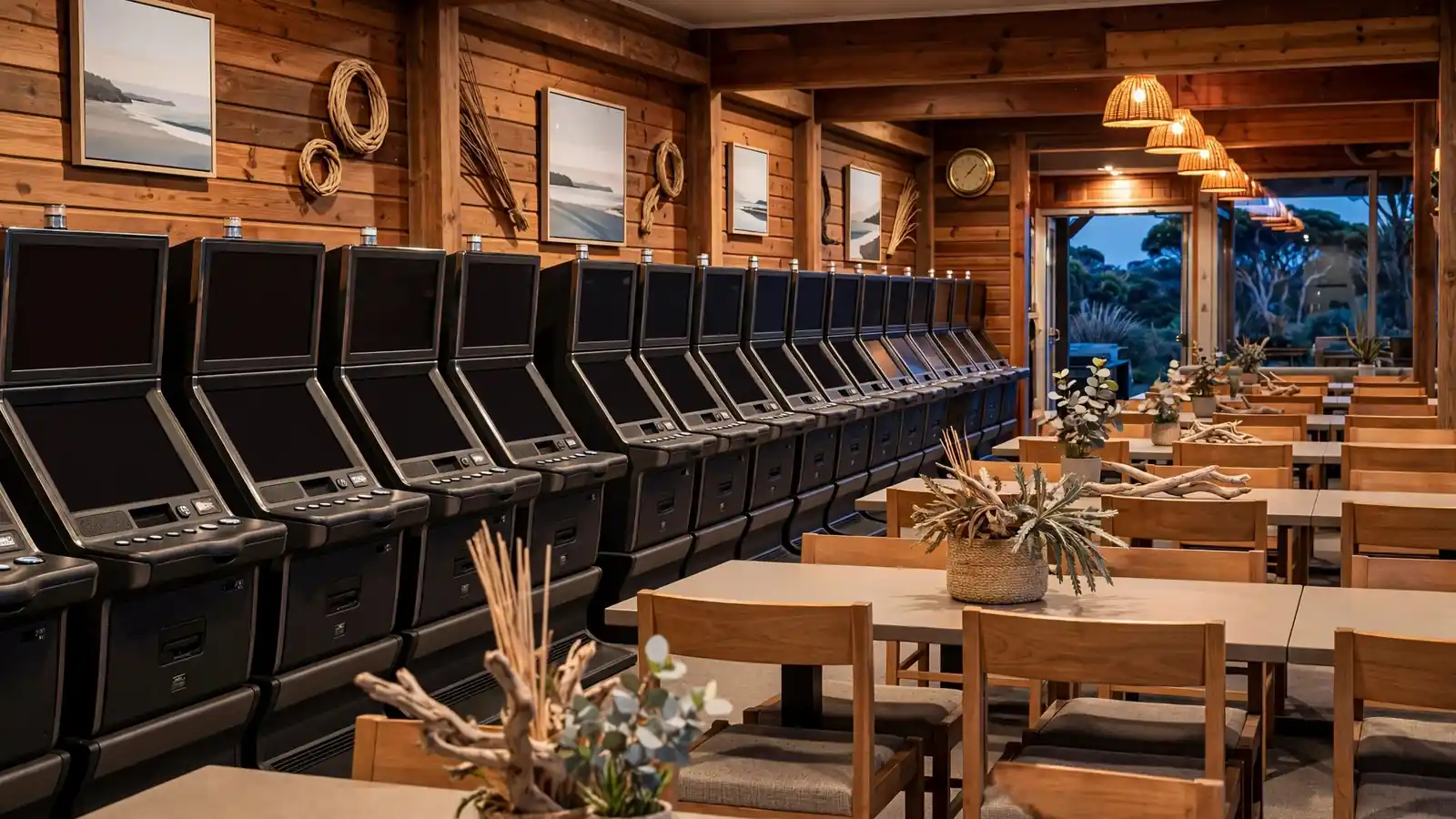
There is also a specific staff safeguard to look for, though it applies according to the size of the venue’s gaming operation. A report by regionriverina.com.au says that, from 1 July, a venue operating more than 20 gaming machines must have a dedicated responsible gambling officer (RGO) on duty while those machines are running. The report also describes a one-month grace period for venues to remove signage and bring in RGOs. Because this is a change with an implementation period, don’t assume every venue has completed the transition simply because the requirement has been reported.
The same report says venues will be required to keep a gambling incident register. It is intended to record events that may indicate a patron is at risk of gambling harm or is already affected by it. That is not a promise that every difficult moment will be handled perfectly. It is a sign that staff should have a process for recognising and recording concerns, rather than leaving them entirely to chance.
If you want to know what support looks like in practice, contact the venue before you go and ask who to approach if you need a break or want help stepping away. A clear answer is more useful than a glossy claim about being “safe”. That word needs substance.
You can also decide your own limits before entering. Deposit limits, loss limits and session time limits are common responsible-gambling tools, and self-exclusion is another option. If you use BetStop, remember that it applies to Australian-licensed operators; it does not bind offshore sites. For a physical visit, though, the useful question is whether the venue can explain its own support process without making you chase for it.
A better check is simple: look for clear venue information, appropriate signage, visible support arrangements and staff who can explain how to get help. Then decide whether the place suits you before you sit down.
Venue Safety Check
- Locate clear venue information and entry arrangements
- Identify responsible-gambling support and the RGO
- Check that gaming signage follows Australian rules
- Establish your own deposit and session limits
- Confirm the venue’s specific support process
Deposits, PayID and the Risks Behind Online Searches
A PayID logo can look like a simple answer when you’re comparing payment options. It isn’t. PayID is a way to address a bank transfer using an email address, mobile number or ABN; the transfer itself runs through Australia’s New Payments Platform (NPP). Major banks support the platform, and it uses end-to-end encryption. That describes the payment rail, not the business receiving your money.
I used to read a familiar payment method as a kind of reassurance. That was a mistake. PayID support does not prove that a gambling site is licensed, that its games are fair, or that its return-to-player information is transparent. It also cannot change the legal position: real-money online casino games cannot lawfully be offered to people in Australia, and there is no Australian-licensed online casino. If an offshore operator accepts a player and then withholds winnings, Australian players have no legal recourse here to recover them.
Using PayID for real-money play at an online casino would also mean linking the PayID to a bank account first. But a transfer can still be declined. A specialist review has reported that some Australian banks, including major banks, have at times blocked PayID transfers to gambling merchants they recognise. Treat that as a possible payment interruption, not a reliable guide to how your own bank will handle a transaction. Don’t keep trying different routes to get around a bank’s block.
“Instant” is a payment label, not a promise that the whole process will be straightforward. A transfer may leave your account while the recipient, account terms or later withdrawal checks remain unresolved. Keep your own bank records, and read the payment and withdrawal conditions before sending money anywhere. PayID’s encryption protects the transfer in transit; it does not settle a dispute with an offshore operator.
There’s another practical snag people leave until too late: identity checks. Before making any deposit, check what documents an operator would require before a first withdrawal. That can include proof of identity and proof of address, and the details on the documents may need to match the account. If you’re not comfortable providing those documents, don’t send money and hope to sort it out later. A payment method cannot replace verification.
Promotional wording can make a deposit offer sound like free money. It isn’t a reason to overlook the conditions attached to it, or to assume a balance can be withdrawn on demand. I’ve learned to pause at that point. A catchy offer can wait.
If you’re looking for Brisbane pokies, keep the distinction clear: PayID is a transfer method, not evidence that an online option is lawful or safe. For physical venues, it has no bearing on how you pay there. Don’t confuse a familiar payment name with protection.
Looking for Pokies Near the Airport? Verify the Location First
An airport-related result can sound more precise than it is. “Near the airport” might describe a venue outside the airport precinct, while a map pin can mark a broad area rather than an entrance. I’d treat any result for Brisbane Airport pokies as a lead to check, not proof that machines are inside the airport or that a particular venue is close enough to suit your trip.
Verifying Location
Start with the venue’s own current information and find the full street address.
Compare that address with a reliable map to see if the pin marks the entrance, a road, or a broad suburb.
Work out the route to the actual entrance before leaving to avoid similarly named places.
Start with the venue’s own current information and confirm its full street address. Then compare that address with a reliable map. Check what the pin actually marks: a building entrance, a nearby road, a shopping or entertainment complex, or simply the centre of a suburb. Those distinctions matter when you are arriving with luggage, working around a pickup, or trying not to miss a connection. A vague label is no destination.
I’ve learned not to trust the first map result just because it looks tidy. A place name can match more than one location, and a result that mentions Brisbane may not be the Brisbane destination you meant. If a listing seems to point somewhere unexpected, check the address and suburb rather than guessing from the name. “Nearby” is a claim, not a measurement.
For a trip from the airport, work out the route to the actual entrance before you leave. Look at the map’s destination label, road access and drop-off point, and make sure the route is for the venue rather than a similarly named place. If you are relying on a driver or public transport, use the confirmed address when planning; don’t assume that saying “the pokies near the airport” will identify one precise stop.
The same care applies to “near me” results. Location settings can be inaccurate, and a phone may show results around an old location or a broad district. Check that the map is centred where you are, then compare the venue’s address with the route you intend to take. If the listing has no clear address, or its details conflict across pages, I wouldn’t build a journey around it.
A useful check is simple: identify the exact venue, confirm its address, and make sure the map takes you to its entrance. That won’t tell you whether it suits your plans, but it prevents one avoidable mistake—travelling to a pin that was never the place you had in mind. Verify first. Then decide.
Brisbane Pokies Hours: Don’t Assume They Run Around the Clock
A venue’s general opening hours do not necessarily tell you when its pokies are available. That distinction is easy to miss when you are planning a trip: a club or hotel may be open while a particular area or service has different hours. I would check the gaming area specifically rather than assume the whole venue runs on one schedule.
I used to treat an hours listing as a simple yes-or-no answer. It isn’t. A page can give you the venue’s usual schedule without making clear whether those hours apply to the pokies, and a general listing may not reflect a change the venue has made. “Open late” sounds useful, but it leaves the important detail unanswered.
For Brisbane venues, look for opening information published by the venue itself. Check whether it gives separate hours for the gaming area, not just the restaurant, bar or broader premises. If the wording is unclear, contact the venue and ask directly when pokies are available. It takes less effort than travelling across town on an assumption.
Pay attention to the date and context of the information, too. A regular weekly schedule may not cover a public holiday, a private function or a temporary change. If your plans depend on a particular day, confirm the hours that apply to that day rather than relying on a general timetable copied elsewhere.
A venue’s general opening hours may differ from the specific hours of its gaming area; always check the pokies’ availability specifically.
There is another small trap: “open now” and “open around the clock” are not the same thing. The first is a snapshot; the second is a claim about ongoing hours. Neither should be inferred from a search result or an old listing. Even a current-looking page can leave out whether the pokies themselves are operating.
I’d also keep the return trip in mind. If you are going out late, check how you will get home before you leave, rather than letting the venue’s closing time decide for you in the moment. A confirmed schedule is useful for planning, not a reason to keep playing longer than you intended.
Set your own stopping point before you arrive. Deposit limits, loss limits and session time limits are tools you can use to keep a night within bounds; they do not depend on the venue’s hours. If you have chosen a time to leave, stick to it even if the room is still open.
No guesswork. Check the gaming hours directly, then plan around them.
South Brisbane and South Bank: Check the Exact Venue
South Brisbane and South Bank can look like one easy destination on a map, but a result labelled for one area may point you somewhere else. I’ve learned not to treat a neighbourhood name as an address. Before making the trip, open the venue’s own page and confirm its street address; then check that the map pin leads to that same place.
If you’re looking for pokies in South Bank, confirm directly with the venue that it has them. A directory category, an old photo or a nearby landmark does not establish what is inside. The same goes for South Brisbane: don’t assume a listing covers both neighbourhoods just because the labels appear together. Close enough on a screen can still mean the wrong destination.
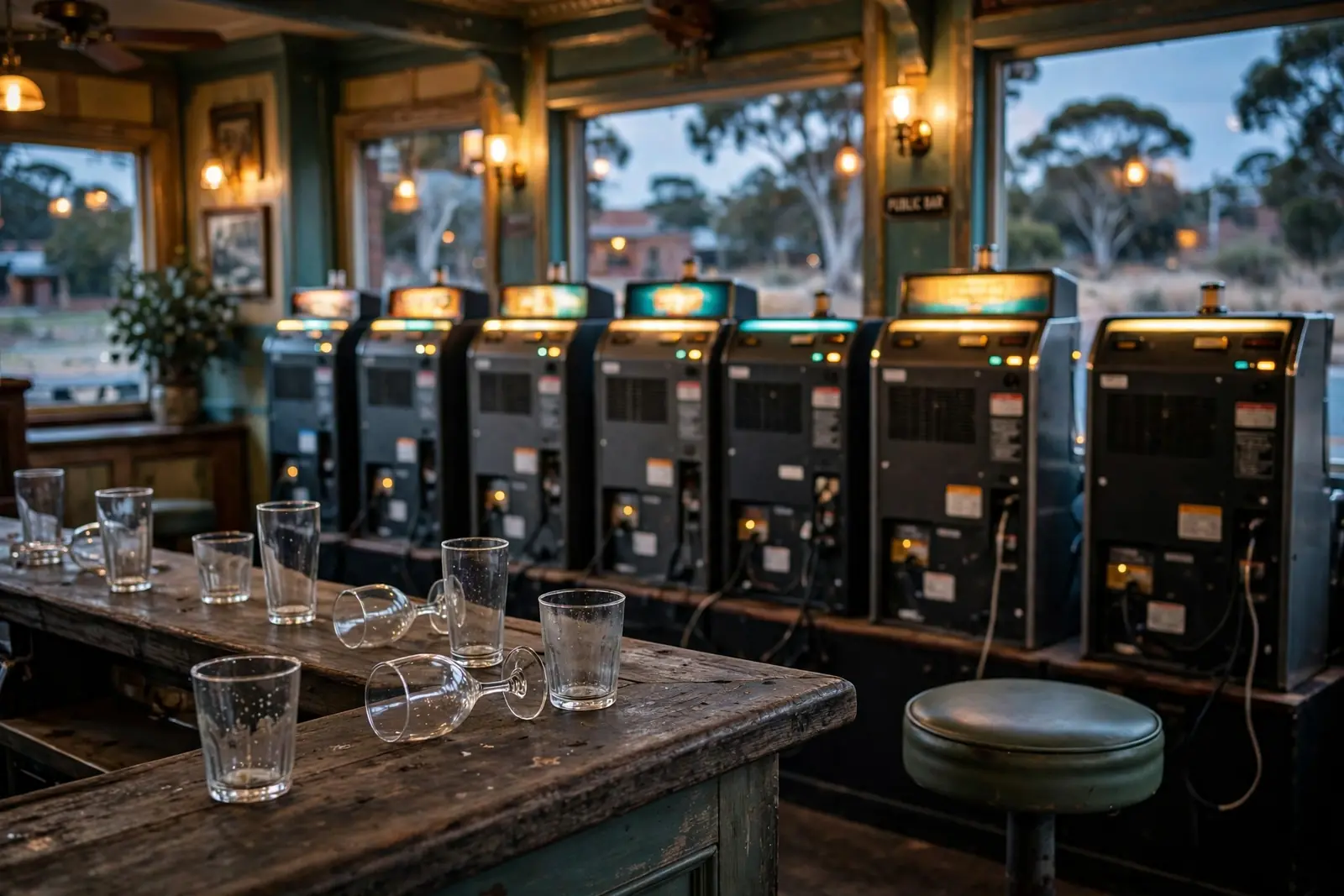
I’d also check that the information is about the venue itself, rather than a nearby bar, hotel or event space with a similar name. If the listing is unclear, contact the venue and ask plainly whether pokies are available at that address. Keep the answer tied to the place you intend to visit. A general claim about a group of venues won’t settle it.
North Brisbane and the Northside are separate location checks, not a shortcut to finding a South Brisbane venue. If you’re willing to travel, compare the actual address with your route and confirm the venue’s details before setting out. I once trusted a broad area label and spent more time sorting out where I was meant to be than I wanted. Not my best plan.
A maximum cash payout is another detail worth asking about directly if it affects your decision. Don’t infer a payout limit from a machine photo, a promotional phrase or a venue’s general listing. Ask what the relevant machine’s payout arrangements are, and whether any conditions apply. Get a clear answer before you play; if the person you reach cannot confirm it, treat the point as unresolved rather than filling in the blank yourself.
Once you have the right address and a direct confirmation, you can decide whether the trip makes sense for you. If you choose to play, set a deposit limit, loss limit or session time limit beforehand. Those tools won’t change the outcome of a spin, but they can help keep your visit within boundaries you chose. And if you need to stop, self-exclusion is another available responsible-gambling tool.
Exact place. Clear answer. No guessing.
Essential Visit Tips
- Confirm the exact street address and map pin before travelling
- Contact venues directly to verify gaming hours and payout limits
- Distinguish between neighbourhood labels and specific venue locations
- Use responsible-gambling tools like deposit and session limits
- Understand that self-exclusion and BetStop have different scopes of application
CBD Clubs and Pokies Searches
When I look for a club in Brisbane’s CBD, I don’t treat the word “club” as proof that pokies are available there. It tells you little about what you’ll find on site. A listing can help you identify a place, but check the club’s own current information for details of its facilities before making a trip. Then confirm the exact address; a result labelled “Brisbane” may not be in the CBD.
“Best” is another slippery word. A ranking can make a venue sound like a sure thing, but it can’t tell you what you’ll win. Every spin is an independent random event. I’ve learned to treat confident-sounding claims as claims, not predictions.
Keep the practical check simple: is this the club you mean, and does its current information describe the facilities you’re looking for? If that information is unclear, contact the venue rather than relying on a directory snippet. No glamour in that. Less guesswork.
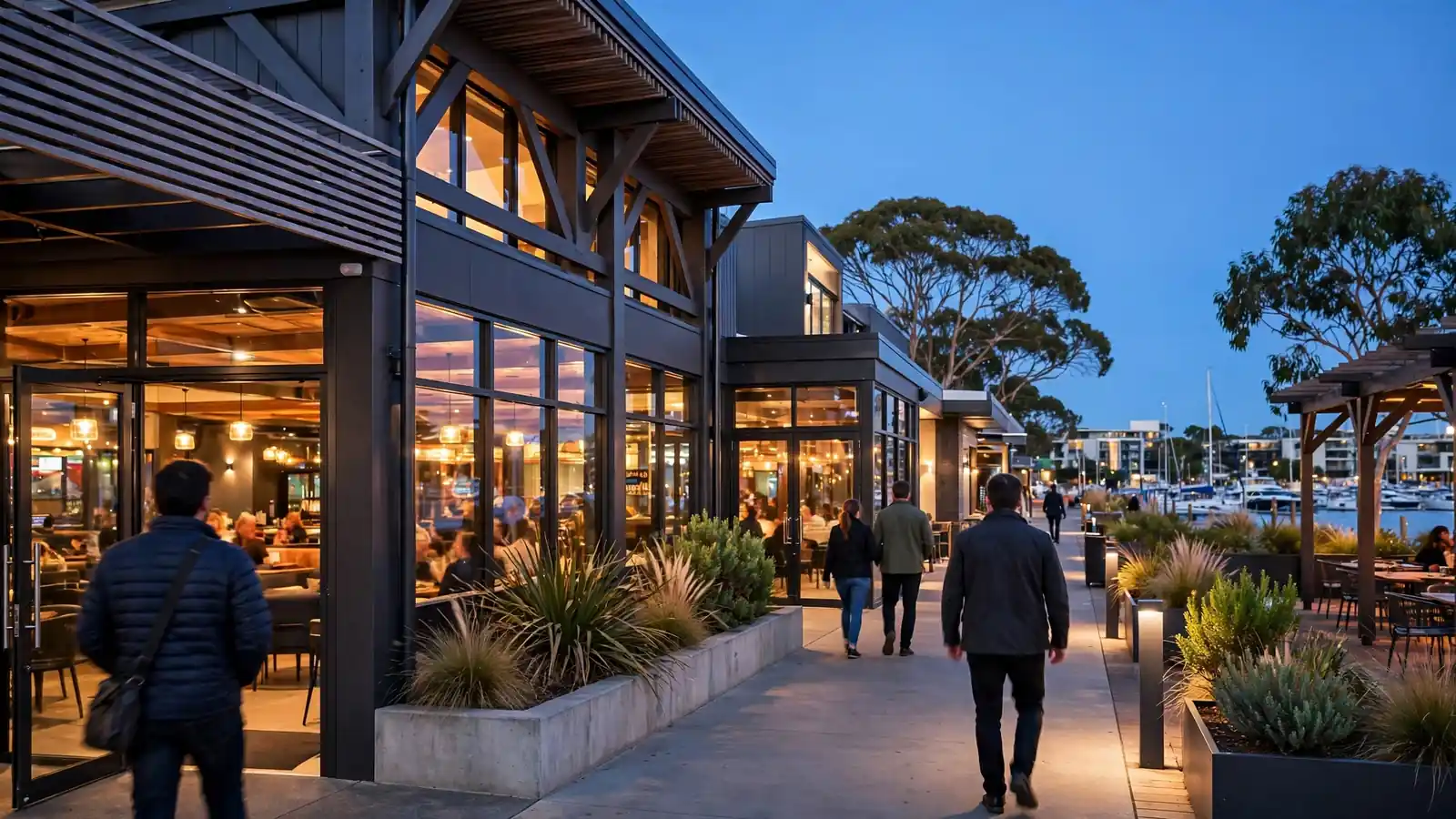
If you’re looking up self-exclusion, first be clear about what you want excluded: access to a particular venue or gambling services more broadly. Self-exclusion is a responsible-gambling tool, alongside deposit, loss and session-time limits. Ask the venue what its own process covers and how to start it; don’t assume a general search result explains the terms.
BetStop has a narrower scope: it applies to Australian-licensed operators and does not bind offshore sites. That distinction matters if a search takes you from a local club to an online offer. The Interactive Gambling Act 2001 prohibits operators from providing real-money online casino games to people in Australia, and there is no Australian-licensed online casino. Offshore operators may accept Australian players, but a player has no legal recourse in Australia if one refuses to pay winnings. Different setting, different risks.
You must be at least 18 to gamble in Australia. If the visit or the search is starting to feel less like a choice and more like something you can’t step away from, pause before going further. Setting a limit or choosing self-exclusion is a practical step, not a failure. A venue’s label won’t make that decision for you.
Searching for Crown Brisbane Pokies
A name appearing beside “Brisbane” can make a venue sound local before you have checked what the result actually refers to. I’ve made that mistake with search snippets: I saw the words I wanted, filled in the gaps myself, and only later noticed the page wasn’t confirming what I thought it was. The phrase Crown Brisbane pokies is not, by itself, proof of a Crown venue or pokie room in Brisbane.
Treat the brand and the location as two separate details to verify. Open the result and look for a clear street address, the venue’s own contact information and a page that specifically describes its physical location. A general Crown page, an old directory entry or a page discussing Brisbane in passing may not answer whether the place you have in mind is actually there. If the address is absent or inconsistent, pause rather than planning a trip around the headline.
There’s another easy mix-up: a page about a brand’s online games is not evidence of a local room with machines. Real-money online casino games, including pokies, cannot legally be offered to people in Australia by online operators. That is a different question from whether a particular physical venue exists in Brisbane. Don’t let one answer stand in for the other.
I wouldn’t read “best pokies room” as a useful description on its own, either. It’s a judgement, not a location detail. First establish which venue the page means; then check that the information is current and that it refers to the kind of visit you’re considering. If it won’t give you a specific Brisbane address or direct you to an official venue page, you still don’t have enough to make the journey.
Keep the check small and boring: confirm the venue name, confirm the address, and contact the venue directly if anything doesn’t line up. Don’t rely on a map label or a copied snippet to settle a branded search. A familiar name can make an uncertain result feel settled. It isn’t.
Are online pokies legal for Australian players?
Yes, Australians can play on offshore sites that accept them, but operators cannot legally offer real-money online pokies to Australians without a domestic licence, and none have been issued. There is no Australian-licensed online casino, and you have no legal recourse in Australia if an offshore casino refuses to pay.
What is the legal age for online gambling in Australia?
You must be at least 18 years old to gamble online in Australia.
Can casinos change the RTP of their games?
Yes, some game providers let casinos choose between different RTP settings for the same game. The game’s title alone may not tell you which setting a casino uses.
What does “wagering requirement” actually mean?
It is the total amount you must bet to meet a bonus’s turnover multiplier before withdrawing winnings. For example, a $500 bonus with a 40x requirement means you must place $20,000 in bets.
Written by the editors at SpinBetter Casino.